 how-to
How to Pack Furniture for Storage: A Step-by-Step Guide
Table of Contents
- How to Prepare Furniture for Storage Before You Pack
- How to Disassemble Furniture for Storage (and Keep the Hardware Sorted)
- What to Wrap Furniture in for Storage: Material-by-Material Guide
- How to Pack Furniture for Storage: Step-by-Step Wrapping and Loading
- How to Organize a Storage Unit for Furniture and Boxes
- Climate, Moisture, and Storage Duration: What You Need to Know
- Common Furniture Storage Mistakes to Avoid
- Frequently Asked Questions
Last Updated: October 15, 2026
How to Prepare Furniture for Storage Before You Pack
Learning how to pack furniture for storage starts long before the first roll of tape. At Red D Stor, we see the same pattern every season: people rush the wrap job, then wonder why a dresser comes out with warped veneer or a musty smell.
Here is the short version: clean it, dry it completely, take apart what you can, and gather the right materials before you touch a single piece.
Clean and Dry Every Surface
Dirt holds moisture, the enemy of stored furniture. Wipe wood with a slightly damp cloth, then dry it with a second cloth. Vacuum upholstery and cushions on both sides, and let everything air out a full day before wrapping.
Disassemble What You Can
Remove legs, shelves, and hardware from anything that comes apart with basic tools. Smaller pieces stack tighter and break less. Keep every screw and bolt with its own piece, not in one shared bag.
Gather Your Packing Materials
Before packing day, collect:
- Moving blankets or old quilts
- Stretch wrap (plastic wrap made for moving)
- Bubble wrap for glass and fragile parts
One roll of stretch wrap covers roughly a sofa and a dresser. Buy more than you think you need.
How to Disassemble Furniture for Storage (and Keep the Hardware Sorted)
Most furniture disassembly is simpler than it looks, beds, tables, and sectionals come apart with a screwdriver or hex key. The real challenge is reassembling months later with every bolt accounted for.
Label and Bag All Hardware
Bag hardware for each piece separately, write the furniture name on the bag, then tape it to the underside of the piece or place it in a labeled box that stays with that item.
A simple system that works:
- One zip bag per piece of furniture
- Label with the item name and part count
- Tape the bag to the frame, not the loose parts
That last step saves hours later. A phone photo of the original setup answers most reassembly questions.
When to Leave Furniture Assembled
Not everything should come apart. Solid wood dressers and heavy cabinets hold up better in one piece. Particle board weakens every time you remove and reinsert a screw, so disassemble it only if you must.
Leave it assembled when:
- The piece is solid wood or metal
- It fits through doorways and into the unit
- Taking it apart risks stripping screw holes
What to Wrap Furniture in for Storage: Material-by-Material Guide
The right wrap depends on the surface, not the size of the piece. Wood needs breathable paper, glass needs bubble wrap, upholstery needs a cover that will not trap moisture, leather needs to breathe, and metal needs corrosion protection.
| Material | Best For | Avoid On |
|---|---|---|
| Moving blankets | Sofas, tables, wood frames | Nothing, safe all around |
| Stretch wrap | Holding blankets in place, drawers | Direct contact with wood finish |
| Bubble wrap | Glass, mirrors, fragile edges | Upholstery, long-term wood storage |
| Packing paper | Wood surfaces, inside drawers | Glass, which needs cushioning |
| Breathable furniture covers | Upholstery, leather, long-term storage | Nothing, safe all around |
| Corrosion-inhibiting paper | Metal frames, tools, hardware | Nothing, safe all around |
Wood: Paper First, Then a Blanket
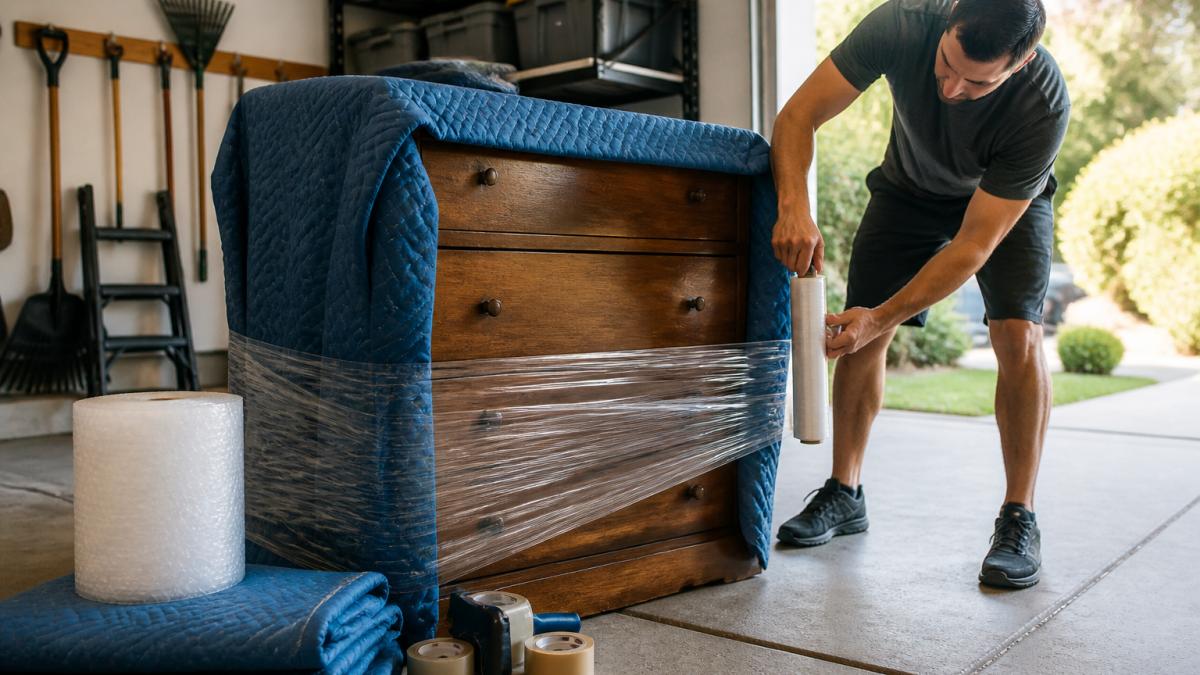
Wood is the material most likely to be damaged by the wrong wrap. Wipe the surface clean and let it dry fully. Wrap the piece in packing paper, tucking it into corners and along edges, then drape a moving blanket over the paper and secure it with stretch wrap, but never let the stretch wrap touch bare wood, since it clings tight and traps moisture, which is how veneer lifts and joints swell.
Leather: Breathable Covers Only
Leather is skin, and skin needs to breathe. Clean it with a leather-safe cleaner, condition it lightly, and let it dry completely. Use a breathable furniture cover or cotton sheet, never plastic, shrink wrap, or a sealed mattress bag, since trapped moisture causes mold and can stiffen or crack the hide.
Fabric and Upholstery: Clean, Dry, Cover Loose
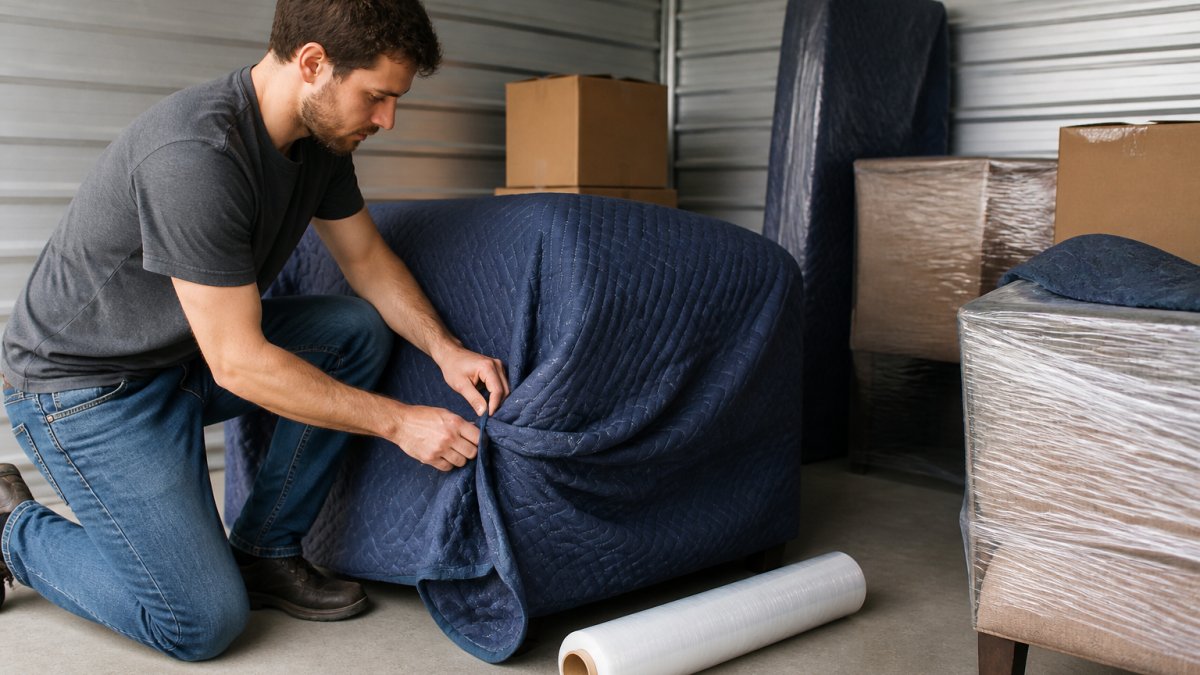
Vacuum both sides of upholstery, including under cushions and along seams, and let it air out a full day. Cover it with a breathable cover or clean cotton sheet, then drape a moving blanket over the top for dust and light protection.
Metal: Stop Rust Before It Starts
Metal frames, legs, and hardware rust when humidity cycles. Wipe the surface clean, dry it, and apply a thin coat of paste wax or corrosion-inhibiting spray to bare metal. Wrap the piece in corrosion-inhibiting paper, then a moving blanket.
Glass and Mirrors: Bubble Wrap Plus Cardboard
Glass gets bubble wrap on both faces, then a sheet of cardboard on each side for rigidity. Tape the cardboard, never the glass. Label it "FRAGILE, GLASS" and store it upright, never flat, so it cannot flex. Large mirrors and glass tabletops should travel in a rigid frame or between two sheets of plywood.
When Breathable Beats Plastic
Plastic and stretch wrap are for short trips and holding blankets in place, not long-term storage. If a piece will sit more than a few weeks, or the unit is not climate-controlled, choose a breathable cover or packing paper.
How to Pack Furniture for Storage: Step-by-Step Wrapping and Loading
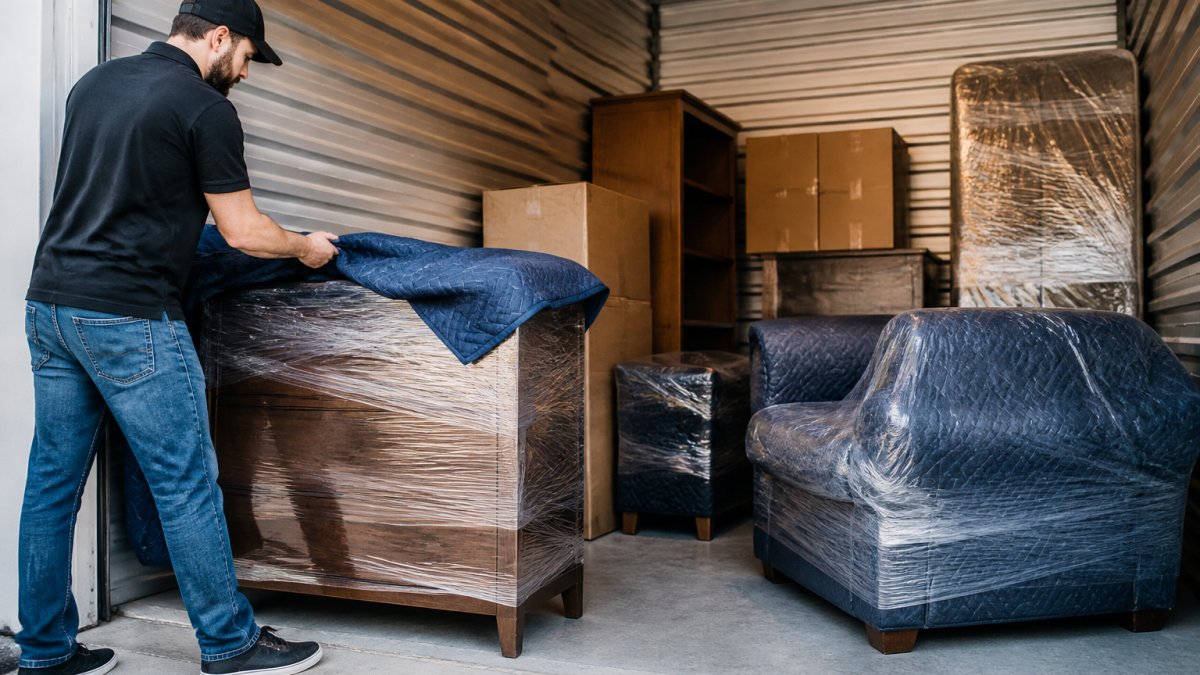
Wrapping and loading is where good prep pays off. Work from the largest pieces down to the smallest, and load back to front so the things you need least go in first.
Wrapping Sofas, Mattresses, and Dressers
Sofas get a blanket over the whole frame, held with stretch wrap. Mattresses go in a mattress bag, then stand on edge inside the unit. Dressers get drawers removed and wrapped separately, with the frame wrapped in paper and a blanket.
Safe Lifting and Moving Techniques
Lift with your legs, not your back, and keep the load close to your body. For anything heavy, use a furniture dolly or a second set of hands. Never drag furniture across a floor, it damages both the piece and the floor.
How to Organize a Storage Unit for Furniture and Boxes
A well-organized unit holds more and protects better. The goal: walk in, reach what you need, and never climb over furniture to get to a box.
Create Walkways and Stack Smart
Leave a clear walkway down the center or along one wall. Put large items like sofas and mattresses against the back and side walls, stack boxes heaviest on the bottom, and keep a path to the door at all times.
Use Drawers and Shelves for Small Items
Empty drawers and shelves are free storage space for small, light items like linens, books, or decor. Do not overload them, since heavy contents can crack drawer bottoms. Label every box on the side facing the walkway so you can read it without moving anything.
Climate, Moisture, and Storage Duration: What You Need to Know
Storage duration and climate should drive every choice, the unit you rent, the wrap you buy, and how you load the space. A three-month stay in a climate-controlled unit needs far less protection than a three-year stay in a non-climate-controlled one.
Match the Unit to the Duration and the Material
| Storage Duration | Best Unit Type | Extra Protection |
|---|---|---|
| Under 3 months | Non-climate-controlled is usually fine | Blankets, off-floor pallets |
| 3-12 months | Climate-controlled for wood, leather, upholstery | Moisture absorbers, breathable covers |
| Over 12 months | Climate-controlled for anything you care about | Moisture absorbers, pallets, annual inspection |
Metal tools, plastic bins, and other items that tolerate temperature swings can live in a non-climate-controlled unit for years without trouble. Wood, leather, upholstery, and anything with veneer or glue joints are the pieces that punish you for skipping climate control.
Why Humidity Matters More Than Temperature
Temperature swings are hard on finishes, but humidity is what actually destroys stored furniture. Above roughly 60 percent relative humidity for weeks, mold and mildew take hold on fabric and leather, wood swells at the joints, and metal rusts.
Seasonal Timing Changes the Math
If you are moving furniture into a non-climate-controlled unit, the season matters. Late spring and summer push humid air in, so pieces loaded then face the highest mold risk; late fall and winter are drier in most regions, a safer window for short-term storage of less sensitive items.
Keep Everything Off the Floor
Concrete floors wick moisture upward, and that moisture finds the bottom of whatever sits on it. Put pallets, cardboard sheets, or plastic risers under every piece of furniture, this does more to prevent bottom-edge damage than any wrap you can buy.
Add Moisture Absorbers for Long Stays
For storage longer than a few months, place moisture absorbers inside closed drawers, cabinets, and boxes, and refresh them on the package schedule. Do not seal a piece so tightly that air cannot move, the goal is moderate humidity, not a sealed container that traps whatever moisture was already inside.
Ask Before You Sign
Before renting, ask the facility three questions: Is the unit climate-controlled? What humidity range does the system hold? Is the unit on an interior hallway or against an exterior wall? Interior units see less temperature swing, and exterior walls can sweat in humid months.
Common Furniture Storage Mistakes to Avoid
Most storage damage comes from a handful of repeat mistakes:
- Wrapping wood in plastic and trapping moisture
- Storing furniture directly on a concrete floor
- Skipping the drying step after cleaning
Each is easy to avoid with planning. The fix is almost always the same: slow down, prep properly, and load with a plan.
Frequently Asked Questions
What do you wrap furniture in for storage?
Use moving blankets for large items like sofas and dressers, stretch wrap to hold blankets in place, and bubble wrap or packing paper for delicate surfaces and glass. Avoid using plastic wrap directly on wood or upholstery for long periods, as it can trap moisture. For mattresses, use a dedicated mattress bag. Cardboard sheets protect protruding edges and corners.
Should you disassemble furniture before storing it?
Disassemble large items like bed frames, tables with removable legs, and sectional sofas when possible. This saves space and reduces the risk of damage during moving. Bag and label all hardware, and tape the bag to the furniture piece or store it in a labeled box. Keep assembled only pieces that are fragile or difficult to reassemble, such as antique cabinets.
How do you keep furniture from getting moldy in storage?
Clean and dry furniture completely before packing. Avoid wrapping wood or upholstery tightly in plastic, which traps moisture. Use breathable covers like moving blankets or cotton sheets. If your unit is not climate-controlled, place moisture absorbers inside the unit and leave small gaps between items for air circulation. Consider a climate-controlled unit for long-term storage of wood or upholstered furniture.
How should you organize furniture in a storage unit?
Place larger, heavier items along the back and sides, leaving a clear walkway down the center. Stack boxes on top of sturdy furniture like dressers or tables, but avoid putting heavy boxes on upholstered pieces. Use drawers and shelves for smaller items, and label everything clearly. Keep frequently accessed items near the front. Leave a small gap between furniture and walls for airflow.
Getting furniture into storage is one thing. Keeping it in the same shape months later is another. Red D Stor offers secure, well-lit storage in the New Philadelphia area, with flexible rental terms for short moves and long stays. Our team keeps the process simple, from your first question to your last load, and we can point you toward the right unit size for your furniture and boxes. Rent now with Red D Stor and store your furniture with confidence.