 how-to
How Do You Store Furniture Safely Without Damage?
Last Updated: October 26, 2026
Quick Summary
To store furniture safely, clean and dry every piece, disassemble what you can, and wrap it in breathable materials like moving blankets or cotton sheets instead of sealed plastic. Keep everything off bare concrete on pallets or risers, leave a few inches of clearance from walls, and store each piece upright in its natural position.
- Plastic wrap traps moisture against surfaces, so reserve it for legs and hardware only.
- Tape hardware bags to the underside of the piece they belong to and label each bag.
- Store wood furniture upright and never stack heavy items on wood surfaces.
- Store box springs flat on a pallet, since leaning them on edge can warp the frame.
- Aim to keep your storage unit at 40-50% relative humidity and check it with a hygrometer.
Table of Contents
- Why Safe Furniture Storage Starts Before the Unit
- How to Pack Furniture for Storage: Cleaning, Disassembly, and Hardware
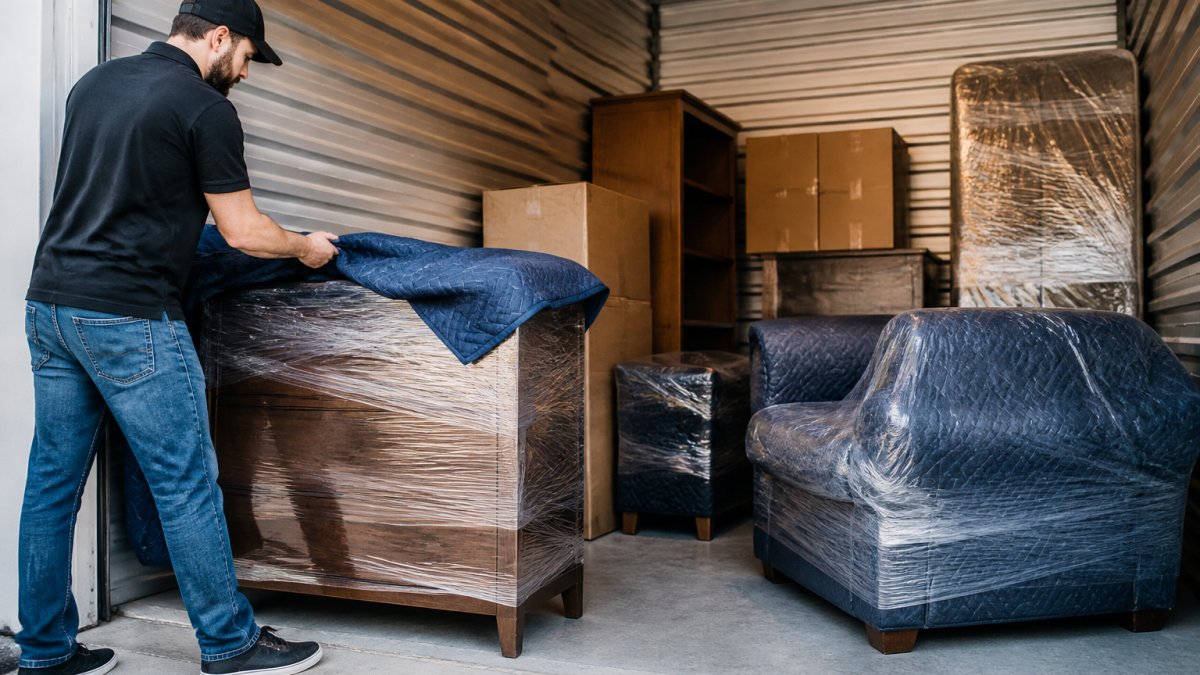
- The Best Way to Wrap Furniture for Storage: Materials That Breathe
- How to Store Wood Furniture Without Warping or Cracking
- How to Store Upholstered Furniture, Mattresses, and Box Springs
- Pest, Mold, and Moisture Prevention in a Self-Storage Unit
- Arranging Your Unit: Floor Barriers, Wall Clearance, and Weight Distribution
- Rent a Unit That Fits Your Furniture at Red D Stor
- Frequently Asked Questions
Why Safe Furniture Storage Starts Before the Unit
Most store furniture damage happens before anything reaches a storage unit: scratched tables, cracked chair legs, and mildewed mattresses start at the packing stage.
The fix starts with how you store furniture safely from day one.
Here's the short version of what works:
- Clean and dry every piece before it leaves your house
- Disassemble what you can and bag the hardware
- Wrap with breathable materials, not sealed plastic
How to Pack Furniture for Storage: Cleaning, Disassembly, and Hardware
Cleaning comes first. Dust and crumbs attract pests, and skin and cooking oils soak into fabric and stain over months.
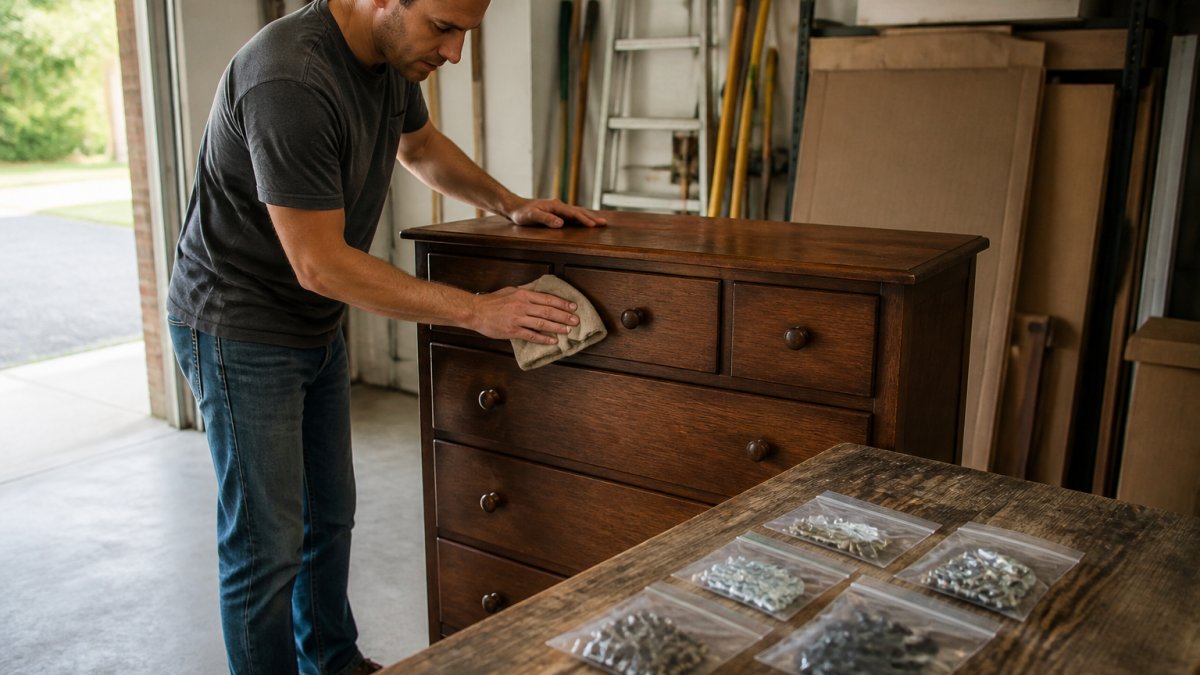
Wipe every surface with a dry cloth or wood-safe cleaner, vacuum upholstery including under the cushions, and let everything dry fully before wrapping.
Next, take apart what you can. Remove legs, shelves, and drawer pulls from tables and bookshelves.
Then deal with the hardware, where most people lose their minds three months later.
- Put screws, bolts, and brackets in a zip-top bag
- Tape the bag to the underside of the piece it belongs to
- Label each bag with the furniture name
The Best Way to Wrap Furniture for Storage: Materials That Breathe
Plastic wrap is the wrong choice for most furniture.
The best way to wrap furniture for storage is with breathable materials that block dust but let air pass through.
| Material | Best For | Avoid On |
|---|---|---|
| Moving blankets | Wood tables, dressers, headboards | Nothing, safe for all pieces |
| Cotton sheets | Sofas, chairs, mattresses | Nothing, breathable and cheap |
| Cardboard sheets | Glass tops, painted surfaces | Wet areas |
| Breathable furniture covers | Long-term storage | Nothing |
| Plastic wrap | Legs and hardware only | Wood, fabric, leather |
Wrap wood furniture in a moving blanket tied with twine. Skip tape on finished surfaces; it pulls off varnish.
For upholstered pieces, a cotton sheet or a breathable cover works better than plastic.
How to Store Wood Furniture Without Warping or Cracking
Wood swells in humidity and shrinks in dry air, and that movement causes cracks and warping.
Here's how to store wood furniture so it survives the winter:
- Keep pieces off bare concrete; use wooden pallets or plastic risers
- Leave a few inches between furniture and the unit's walls
- Store tables and dressers upright, in their natural position
Climate-controlled storage helps in humid months. Without it, place a moisture absorber nearby and check it monthly.
Watch out: storing a wood table flat with weight on top is the fastest way to a bowed top. Stand it on its legs or its side.
How to Store Upholstered Furniture, Mattresses, and Box Springs
Fabric holds odors and moisture, so upholstered furniture needs more care than wood, and each piece has its own failure mode. A sofa on its side can bend its frame, a mattress on concrete grows mold, and a box spring on edge can warp its springs.
Sofas and upholstered chairs
Vacuum every surface, including the underside, seams, and between cushions, crumbs and pet hair attract pests, and body oils stain over months. Treat spots with fabric cleaner and dry completely before covering.
- Remove cushions and store them separately, standing on edge, so they do not compress and lose shape
- Wrap the frame in a cotton sheet or breathable furniture cover; skip plastic, which traps humidity against the fabric
- Store the sofa upright, on its feet, never on its side or back, the frame and springs are built to carry weight in one direction only
For leather sofas and chairs, wipe with leather conditioner to prevent drying and cracking, then cover with a breathable sheet. Never wrap leather in plastic, trapped moisture causes irreversible cracking and mildew.
Mattresses
A mattress is the piece most likely to come out smelling musty: it is thick, absorbent, and hard to dry once moisture gets in.
- Vacuum the top and sides, and spot-clean any stains with a mild fabric cleaner; let it dry fully
- Use a breathable mattress bag, the kind sold for moving, not a plastic mattress bag, which traps humidity
- Store it flat on a clean pallet, or stand it on its side against a wall with a support so it does not slump
For storage over a few months, check the mattress at each visit: press the underside and smell the surface. A musty smell means moisture got in, air it out on a dry day before it spreads.
Box springs
Box springs are the most commonly damaged piece in storage because people lean them on edge and leave them. The springs and frame are designed to sit flat and carry weight evenly.
- Store a box spring flat on a pallet, not on edge and not leaning against a wall
- Cover it with a breathable sheet or mattress bag
- Keep it off concrete and away from exterior walls
If space forces you to store it on edge, lean it against a wall with the long side down and support it so it cannot bow, and check it at each visit for a curve in the frame.
A note on frames and hardware
Before wrapping any upholstered piece, check the frame for loose legs, wobbling joints, or missing glides. Tighten what you can and bag removable hardware with the piece, a loose leg is a scratch waiting to happen.
Pest, Mold, and Moisture Prevention in a Self-Storage Unit
Two things ruin stored furniture faster than anything else: pests and moisture. Both are preventable if you understand how they get in and check on a schedule.
How moisture actually damages furniture
Moisture damage is rarely a single event. It is a slow cycle: humid air condenses on a cool surface, the material absorbs it, and a dry spell pulls it back out.
Concrete floors and exterior walls are the usual source: concrete wicks ground moisture into the air, and an exterior wall runs cooler than the air, making it a condensing surface.
Mold and mildew: prevention and early detection
Mold needs three things: moisture, a food source (dust, body oils, fabric sizing, leather conditioners), and still air. Remove any one and it stalls.
- Clean and dry every piece before storage, dust and oils are the food source
- Never wrap in sealed plastic; use breathable covers so moisture can escape
- Leave gaps between pieces and a walkway so air moves
Early detection is mostly smell and touch. A musty odor is the first sign, often before visible growth. On inspection visits, run a hand along the underside of wood and the back of upholstery, cool or damp surfaces are where mold starts, and look for white or green fuzz in seams, under cushions, and in corners.
Pests: what actually attracts them
Insects and rodents come for food, shelter, and nesting material, usually crumbs in upholstery, cardboard (roaches eat the glue and nest in the corrugation), and dark gaps between stacked items.
- Vacuum upholstery, seams, and the underside of furniture before storage, crumbs and pet hair are the main draw
- Skip cardboard for long-term storage; use plastic bins with tight lids for small items
- Store wool, cotton, and other natural-fiber items with cedar blocks or a sealed mothball alternative, and check them at each visit
Watch for the signs on every visit: droppings in corners, chewed cardboard or fabric edges, small holes in upholstery, and fine webbing in seams. Catching a problem early is far cheaper than replacing a mattress or sofa later.
A simple inspection schedule
Set a recurring reminder and treat it as part of the rental, not an afterthought.
| Interval | What to do |
|---|---|
| First week | Confirm nothing is touching the floor or walls; check the hygrometer reading |
| Monthly | Smell for mustiness, feel undersides for dampness, look for droppings or chewed edges, recharge desiccants |
| Seasonally | On a dry day, open the unit and let air exchange; re-check wood for new cracks or warping and metal for rust |
| Before retrieval | Do a full walk-through before loading anything, so you catch damage while it is still fixable |
A secure facility with good ventilation and pest control makes all of this easier. If you're storing wood, leather, or heirlooms, ask about climate control.
Arranging Your Unit: Floor Barriers, Wall Clearance, and Weight Distribution
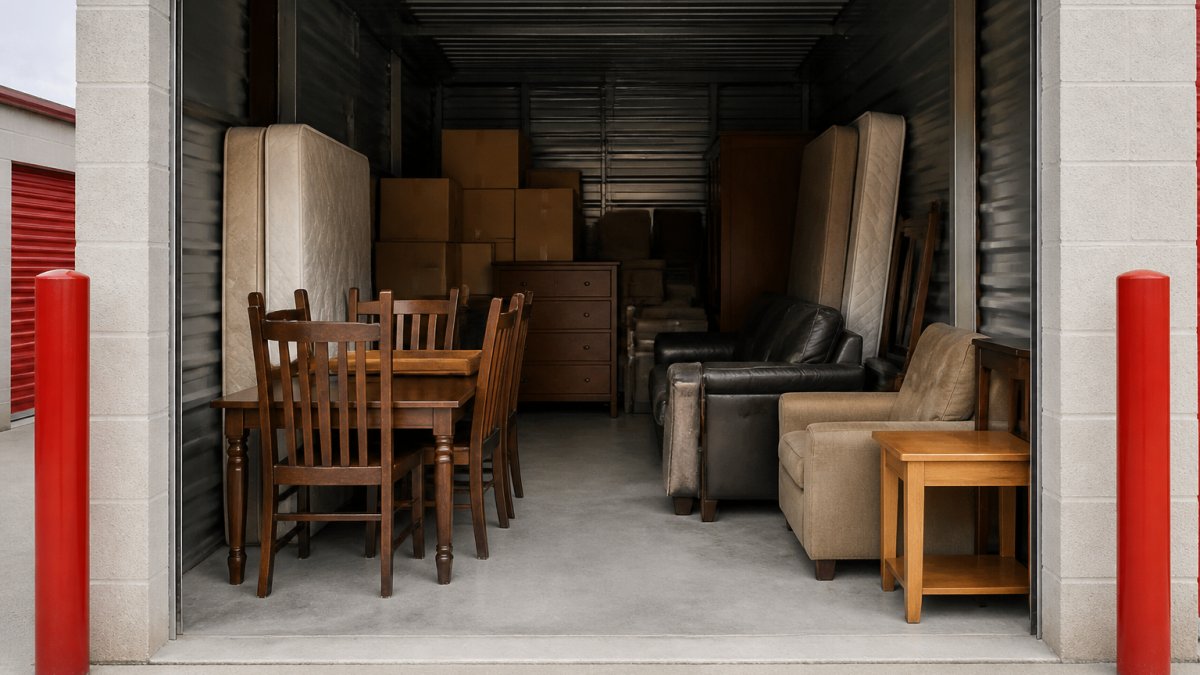
A well-packed unit protects furniture; a badly packed one damages it. The layout matters as much as the wrapping.
Start with the floor: lay down wooden pallets or plastic risers so nothing touches bare concrete, which wicks moisture straight into wood and fabric.
Next, think about weight. Put heavy furniture at the back and along the walls.
Then leave clearance:
- A few inches between furniture and the walls for air circulation
- A walkway down the middle so you can reach items without climbing
- Space between pieces so nothing presses against a finished surface
Store large items upright in their natural position. A bookshelf on its side can warp; a table on its top can bow.
Rent a Unit That Fits Your Furniture at Red D Stor
Choosing the right unit keeps your furniture safe for the long haul. A unit that's too small forces you to stack and squeeze, exactly how scratches and cracks happen.
At Red D Stor, we keep the process simple: secure storage with a straightforward rental process, so you can get a unit quickly and get on with your move.
Here's what to look for when you rent:
- Size: measure your largest pieces and add walking room
- Access: pick a unit you can reach without moving other items
- Security: ask how the facility protects your belongings
We're happy to walk you through the options and help you pick the right fit.
Frequently Asked Questions
What is the best way to store furniture long term?
Clean and fully dry every piece first, then disassemble what you can and bag the hardware. Wrap surfaces in breathable moving blankets or cotton sheets rather than sealed plastic. Keep furniture off the concrete on wooden pallets or plastic risers, leave a few inches of wall clearance, and avoid stacking heavy items on tabletops. In a climate-controlled unit, wood and upholstery handle seasonal humidity swings far better, which matters most for long-term storage.
What should you not put in storage?
Skip anything perishable, flammable, or alive: food, plants, propane tanks, paint, and gasoline. Mattresses that were never cleaned or dried can turn moldy, and leather or wood that went in damp will only get worse. Also leave out items with no protection from pests, like opened boxes of fabric or paper. If you are unsure about a piece, clean it, dry it completely, and wrap it before it goes in the unit.
How do you keep furniture from getting moldy in storage?
Moisture control is the whole game. Never store furniture that is damp, and let cleaned pieces air-dry fully before wrapping. Use breathable covers instead of plastic wrap so trapped humidity can escape. Keep everything off the floor with pallets or risers and leave space between items and the walls for air circulation. A climate-controlled unit limits the humidity swings that feed mold, and a quick inspection every few months catches problems early.
Should you disassemble furniture before storing it?
Yes, for most large pieces. Removing legs from tables, taking apart bed frames, and detaching shelves saves floor space and reduces the chance of stress cracks or snapped joints. Put every screw, bolt, and bracket in a labeled zip-top bag and tape it to the piece it belongs to. Keep the original assembly instructions with the hardware so reassembly is quick. Small, solid pieces like nightstands can stay assembled if you have the room.
Storing furniture safely comes down to preparation, breathable materials, and a smart layout. Get those right, and your furniture comes out the way it went in.
Ready to find the right unit? Get started with Red D Stor and give your furniture a secure, well-kept home.