 how-to
Secure Furniture Storage Requirements: 2026 Guide
Table of Contents
- Facility Requirements That Make Furniture Storage Secure
- Choosing the Right Storage Unit Size for Furniture
- Climate-Controlled Furniture Storage: When It Is Worth It
- How to Wrap Furniture for Storage Without Trapping Moisture
- How to Prevent Mold in Storage Units
- Loading, Arranging, and Inspecting Stored Furniture
- Insurance, Documentation, and Storage Duration
- Conclusion
- Frequently Asked Questions
Last Updated: October 19, 2026
Facility Requirements That Make Furniture Storage Secure
Secure furniture storage starts with the building, not the boxes. A unit only protects a sofa or dresser if the facility controls who gets in and keeps pests and damp out.
Most guides stop at "look for a gate and a camera." Print this checklist and bring it to every tour.
The Furniture-Storage Facility Checklist
Access and entry control
- Gate or door requires a unique personal code, not a shared master code
- Entry log is retained and staff can tell you who accessed the unit area in the last 30 days
- Unit door has a hasp that accepts your own disc lock, not a built-in lock the facility controls
Monitoring and staffing
- Video surveillance covers the gate, drive aisles, building entrances, and the corridor outside your unit
- Cameras record to storage, not just a live feed, so footage exists after an incident
- Staffed office hours are posted, and someone is on site during those hours
Unit condition
- Ceiling, walls, and floor are free of water stains, efflorescence, and soft spots
- Door seals and thresholds are intact, with no daylight visible under or around the door
- Unit is swept clean and dry at move-in, with no debris or previous-tenant residue
Pest and moisture control
- Bait stations or traps are present and serviced by a licensed pest provider
- No rodent droppings, chew marks, or burrows along exterior walls
- Gutters and downspouts discharge away from the building, not against unit walls
Climate and airflow
- Climate-controlled buildings hold a stated temperature range and manage humidity, not just temperature
- Standard units have ventilation, not sealed dead air
- You can place pallets or shelving so furniture never rests on concrete
Rules and paperwork
- Written lease states what the facility is and is not liable for
- Facility discloses whether it offers any protection plan and what it excludes
- Month-to-month terms are available, with the notice period in writing
Questions to Ask Before You Sign
A tour shows what the facility wants you to see. These answers show how it actually runs:
- "Can you show me the entry log for this unit's corridor for last month?" A facility that tracks access answers in minutes; one that cannot is not monitoring.
- "What is the temperature and humidity range in the climate-controlled building, and how is it measured?" "Climate controlled" is marketing until someone gives you a number.
- "Who handles pest control, how often, and can I see the service record?" A licensed provider with a schedule beats a can of spray in the office.
- "What happens if the roof leaks over my unit?" You want a written response process, not a shrug.
- "Is my lock the only lock on the unit, or does staff hold a key?" Know who can open your door besides you.
Red Flags That Should End the Tour
- A unit that is damp to the touch or smells like mildew
- A gate that stands open during business hours with no one watching it
- Staff who cannot explain what the facility's insurance covers
A secure facility is not the one with the most cameras, it is the one that answers the checklist without hesitation.
Choosing the Right Storage Unit Size for Furniture
Matching your load to the right unit size saves money and prevents damage: an oversized unit wastes cash, and an overcrowded one forces stacking that causes cracks and scratches. List what you plan to store, then measure the largest piece, a sofa and mattress set need floor space, not just volume.
Matching Common Furniture Loads to Unit Sizes
Use this as a starting guide, then confirm with the facility before you book:
| What You Are Storing | Suggested Unit Size | Notes |
|---|---|---|
| Seasonal decor, winter clothes, a few boxes | Small locker | Cheapest option for light loads |
| Studio apartment: bed, dresser, small sofa | 5×10 unit | Fits a mattress set upright against a wall |
| One-bedroom home: sofa, bed, table, boxes | 10×10 unit | Leaves aisle space to walk in |
| Two-bedroom home or small office | 10×15 unit | Room for a sectional sofa and appliances |
| Full home or business inventory | 10×20 unit or larger | Best for long-term storage |
A 5×10 unit is roughly a walk-in closet and holds more than most people expect if you stack boxes high and stand the mattress on its side.
Climate-Controlled Furniture Storage: When It Is Worth It
Climate-controlled furniture storage holds a unit within a set temperature range and manages humidity. It costs more, but wood swells and cracks when humidity swings, upholstery can grow mildew, and mattresses trap moisture. For more than a few weeks, climate control is the safer call.
Standard vs. Climate-Controlled Units
The difference is what the building does about heat, cold, and moisture.
| Feature | Standard Unit | Climate-Controlled Unit |
|---|---|---|
| Temperature | Follows outside weather | Held in a steady range |
| Humidity | Unmanaged | Managed to reduce damp |
| Best for | Short-term, sturdy items | Wood, upholstery, mattresses, heirlooms |
| Cost | Lower | Higher |
Standard storage works for plastic bins, tools, and metal items short-term. Anything with fabric, veneer, or glue joints belongs in climate control.
How to Wrap Furniture for Storage Without Trapping Moisture
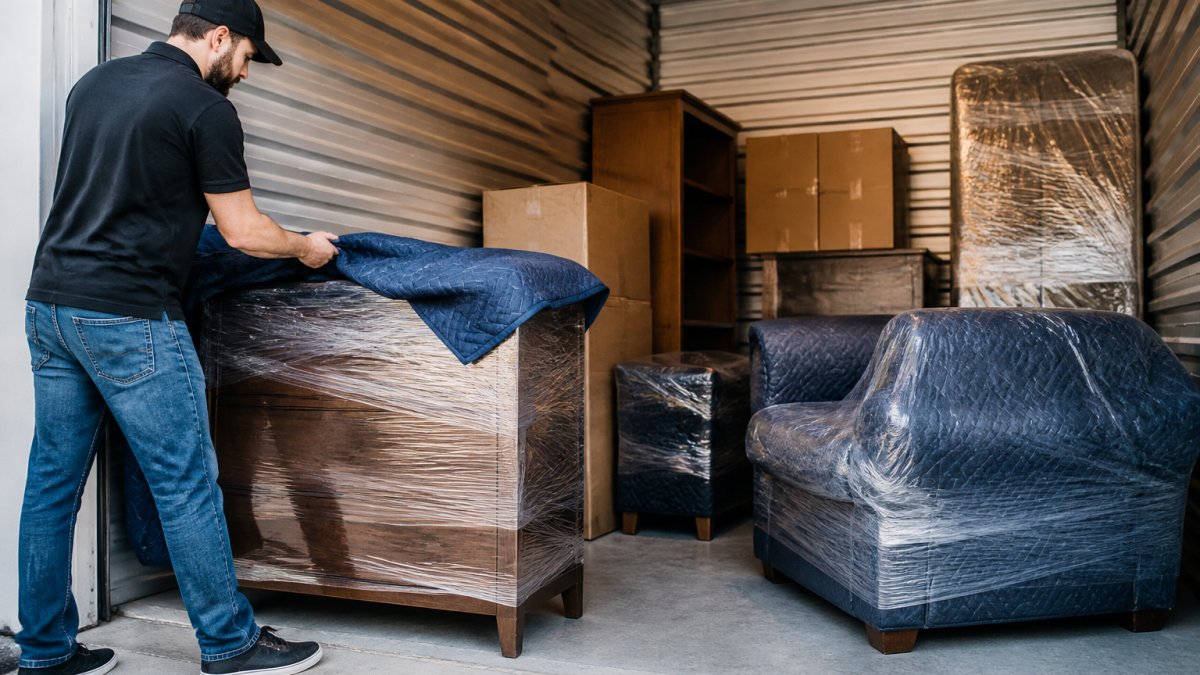
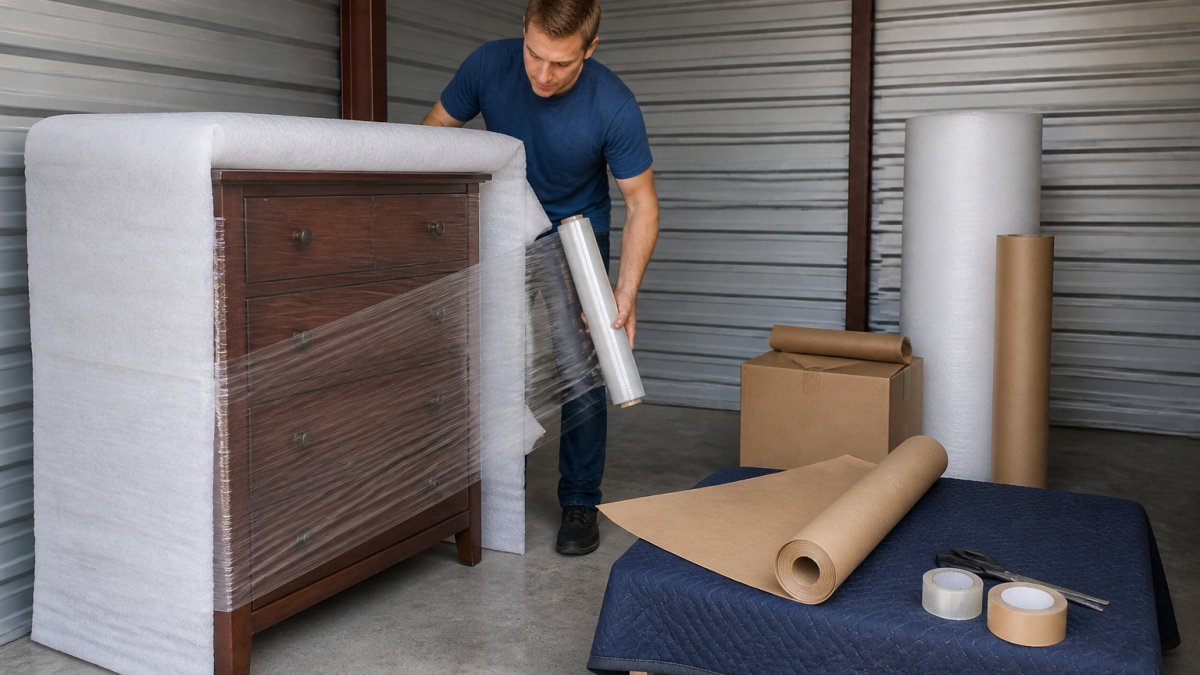
Knowing how to wrap furniture for storage is the step most people get wrong. Block dust and scuffs while letting the piece breathe, sealed plastic traps moisture against wood or fabric, which is exactly how mold starts.
Step-by-Step Wrapping Sequence
- Clean and dry every surface. Wipe down wood, vacuum upholstery, and let everything air dry fully before wrapping.
- Remove legs, shelves, and hardware. Bag the screws and tape the bag to the piece so nothing goes missing.
- Wrap corners first. Foam padding or cardboard corners stop dings during the move.
- Cover with breathable wrap. Use moving blankets or storage wrap, not sealed plastic.
- Label each piece. Write the contents and room on a tag or piece of tape.
- Leave a small gap for airflow. Do not seal the cover tight against the surface.
How to Prevent Mold in Storage Units
Mold needs moisture, warmth, and no airflow; cut off any one and it cannot take hold. Preventing mold in storage units comes down to dry furniture, breathable covers, and space between items.
Follow these habits:
- Never store furniture that is damp or was recently cleaned with liquid
- Leave a walkway and gaps between pieces for air to move
- Place items on pallets or shelves, never directly on concrete
Material-Specific Protection: Wood, Upholstery, and Mattresses
Different materials fail in different ways, so treat each on its own terms.
- Wood furniture: Dust with a soft cloth, skip heavy polish, and cover with a breathable blanket. Store dressers and tables upright, never on their sides.
- Upholstery: Vacuum thoroughly, spot clean and dry any stains, then drape a cotton sheet or blanket over the piece. Do not wrap fabric in plastic.
- Mattresses and box springs: Store flat or standing on edge, never bent. Cover with a breathable mattress bag, not a sealed plastic one, and keep them off the floor.
Loading, Arranging, and Inspecting Stored Furniture
A good loading plan protects furniture as much as good wrapping. Most damage happens on move-in day: a corner knocked against a door frame, a dresser carried on its side, a sofa wedged until the frame flexes. This plan puts heavy pieces in first, keeps them upright, and leaves a path to inspect them later.
Before Move-In Day: Measure and Map
Do this the week before you load, not the morning of.
- Measure the unit's clear interior. Width, depth, and height at the door and back wall, door openings are often narrower than the unit.
- Measure every large piece. Record length, width, and height for the sofa, mattress set, dressers, tables, and appliances.
- Sketch a floor plan on graph paper. Mark the door, the aisle you want to keep, and where each large piece will sit. A 10×10 unit leaves roughly a 30-inch aisle if you line three walls.
- Measure the access path. Gate width, drive-aisle turns, corridor width, and the unit door. A piece that fits the unit but not the corridor is still a problem.
- Confirm the unit is swept, dry, and ready. Put down pallets or a plastic floor cover first.
The Loading Sequence
Load in this order to keep heavy pieces against walls and fragile pieces out of the traffic path:
- Floor protection first. Pallets or a heavy plastic sheet, nothing touches bare concrete.
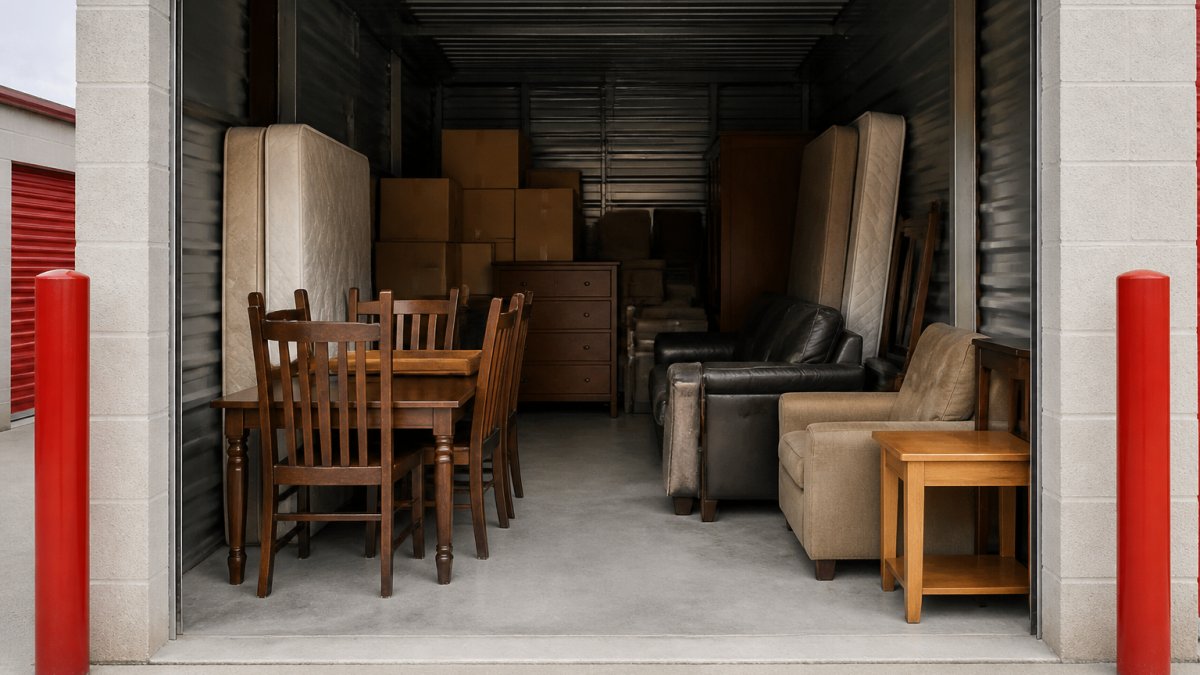
- Heavy, tall pieces along the back and side walls, upright. Dressers, wardrobes, bookcases, and the sofa stand as they would in a room. Never lay a dresser or bookcase on its side, the frame and drawers are built for vertical load.
- Mattress sets next, standing on edge or flat. Never bent or folded, and keep them off the floor.
- Tables and desks. Remove legs if possible, bag the hardware, and tape it to the underside. Store tabletops upright against a wall or flat on a stable base, never leaning at an angle where the top can warp.
- Boxes and smaller items on top and in the center. Heavy boxes low, light boxes high. Label every box on two sides.
- Fragile pieces last, off the floor and away from the door. Mirrors, glass tabletops, and lamps go where nothing will be stacked against them.
- Leave the aisle and airflow gaps. A center aisle and a few inches between pieces let you inspect and let air move.
- Lock up with your own disc lock. Confirm the hasp is seated and the lock is flush.
Lifting and Carrying Without Damage
- Two people for anything taller than your shoulder. A dresser carried by one person tips and cracks a leg or drawer runner.
- Lift with your legs, keep the piece close, and never twist while carrying. Twisting is how backs and furniture frames fail.
- Use a furniture dolly and moving straps for appliances and heavy case goods. Straps keep the piece level and the load off your hands.
The Inspection Schedule
Set the schedule before you lock the door, and put it on your phone calendar.
- Short-term storage (under three months): walk through monthly for damp, pests, dust buildup, and anything that has shifted.
- Long-term storage (three months or more): inspect every two to three months and refresh protective covers, which collect dust and compress over time.
- After heavy rain or a temperature swing: do an extra walk-through of the ceiling, the floor at the door, and the underside of anything on a pallet.
What to Do If You Find a Problem
- Water stain or damp: photograph it, move affected pieces away from the wall, and notify the facility in writing the same day.
- Pest activity: photograph droppings or chew marks, remove nearby food or paper, and request pest service in writing.
- Mold or mildew smell: pull the cover off, move the piece to a dry area, and let it air out before deciding whether to clean or discard.
A loading plan and an inspection calendar cost an afternoon and a phone reminder, and they are the difference between furniture that comes out the way it went in and furniture that comes out with a story you would rather not tell.
Insurance, Documentation, and Storage Duration
Insurance is the question renters ask last and should ask first.
Ask two direct questions before you sign:
- Does my homeowner's or renter's policy cover items in a storage unit, and what is the limit?
- Does the facility offer any protection plan, and what does it actually cover?
Document everything: photograph each piece before it goes in, keep a written inventory, and save receipts for valuables. If a claim happens, that file is what gets it paid.
Storage duration shapes every other choice. A few months suits a standard unit and basic wrapping; long-term storage calls for climate control, sturdier covers, and a real inspection routine.
Conclusion
Getting furniture storage right is mostly boring details: a secure facility, the correct unit size, breathable wrapping, and a monthly look inside the unit.
At Red D Stor, we keep it simple. Our secure facility offers straightforward month-to-month rentals, and a local team that answers your questions before you sign.
Ready to protect your furniture? Get started with Red D Stor and reserve the unit that fits your load.
Frequently Asked Questions
What makes a storage unit suitable for furniture?
A suitable unit for furniture storage combines controlled access, good lighting, video surveillance, and a sealed, pest-free structure. Climate-controlled furniture storage adds steady temperature and humidity, which protects wood, upholstery, and mattresses from warping, cracking, and mold. Check that the unit door seals properly, the floor stays dry, and the facility allows you to inspect your unit on a schedule. Ask about insurance or liability coverage before you sign, and confirm the rental terms so you know what happens if you need to extend your storage duration.
How should you prepare furniture before putting it in storage?
Clean and dry every piece first, because dust and crumbs attract pests and trapped moisture feeds mold. Disassemble beds, tables, and sectionals where possible, bag the hardware, and label each bag. Wipe wood with a mild cleaner, vacuum upholstery, and let everything air dry fully. Treat leather with a conditioner before storage. Then wrap each item in packing paper or foam and furniture wrap, leaving breathable gaps rather than sealing pieces in plastic, which traps humidity against the surface.
How much space do you need to store furniture safely?
The storage unit size for furniture depends on the load. A 5x10 unit typically holds a mattress set, a dresser, and several boxes, while a 10x10 fits a one-bedroom apartment's worth of furniture. Leave a walkway down the center so you can reach items and keep airflow moving. Stack boxes on pallets rather than directly on the floor, place large furniture against the walls, and never pack a unit so tightly that air cannot circulate. Facility staff can help you estimate the right size before you rent.
How can you prevent mold and mildew on stored furniture?
Mold needs moisture, warmth, and still air, so attack all three. Store only clean, fully dry furniture, use breathable covers instead of plastic sheeting, and leave space between items for airflow. Climate-controlled furniture storage keeps humidity steady, which is the most reliable defense in humid months. Add moisture absorbers to closed units, keep furniture off concrete floors, and inspect your unit monthly for dampness or musty smells. If you spot mildew early, wipe it with a diluted vinegar solution and let the piece dry in the sun before returning it.