 blog
Renting Small Storage Units Locally: A Practical Guide
Last Updated: October 25, 2026
Quick Summary
Small storage units are compact rentals, typically 25 to 50 square feet, built for boxes, seasonal items, and a few pieces of furniture. A 5x5 unit measures 25 square feet and holds about one furnished closet's worth of belongings, including 30 to 40 medium boxes, a chair, and a few stacked totes.
- The share of U.S. households renting storage climbed from 11.1% in 2022 to 13.4% in 2024.
- A 5x5 unit does not fit a sofa, mattress set, or full bedroom suite; step up to a 5x10 or 10x10.
- Ask for the promotional rate, the rate after the promotion, and the all-in move-in cost.
- Most rentals run month to month rather than by the day, so confirm minimum terms before reserving.
- Visit at least two facilities in person before you reserve to check lighting, drive aisles, and staff.
Table of Contents
- Why Small Storage Units Are the Fastest-Growing Rental Choice
- What Fits in a 5x5 Storage Unit
- Small Storage Unit Cost per Month: What Drives the Price
- Renting a Storage Unit for a Week: Short-Term Options
- How to Organize a Small Storage Unit So You Can Actually Find Things
- How to Compare Local Facilities Before You Rent
- Reserve Your Small Unit at Red D Stor
- Frequently Asked Questions
Why Small Storage Units Are the Fastest-Growing Rental Choice
More households are renting storage than at any point in recent memory, and the smallest units are doing much of the work. According to PwC's self-storage outlook, the share of U.S. households renting at least one storage unit climbed from 11.1% in 2022 to 13.4% in 2024, the largest jump between the years the report compared.
Small storage units are compact rentals, typically 25 to 50 square feet, built for boxes, seasonal items, and a few pieces of furniture. They cost less than a garage-sized unit and rent faster. That combination explains the demand.
The Numbers Behind the Demand
StorageCafe's 2025 survey found that 33% of Americans use self-storage to manage extra belongings (StorageCafe renter survey). Most of those belongings are not heirlooms. They are holiday decorations, off-season clothing, and the spare bedroom's contents.
Small units fit that job. A 5x5 unit holds roughly a closet's worth of goods, which is exactly what a studio apartment or a downsizing household needs to clear.
What Fits in a 5x5 Storage Unit
A 5x5 storage unit measures 25 square feet and holds about one furnished closet's worth of belongings, including 30 to 40 medium boxes, a chair, and a few stacked totes.
Here is what fits comfortably:
- 30 to 40 medium moving boxes
- Seasonal decorations in labeled totes
- Off-season clothing on a small rack
- A nightstand, lamp, or small bookshelf
What does not fit: a sofa, a mattress set, or a full bedroom suite. The 10x10 size accounts for 35.6% of industry revenue, according to HireAHelper's 2026 storage statistics, which tells you how often renters need more than a closet.
Our advice: measure your pile before you book. A 5x5 is generous for decorations and tight for furniture.
A 5x5 unit measures 25 square feet, and here is what it holds and what it does not.
| Item | Fits in a 5x5? | Note |
|---|---|---|
| Medium moving boxes | Yes | 30 to 40 boxes |
| Seasonal decorations in totes | Yes | Labeled totes |
| Off-season clothing | Yes | On a small rack |
| Nightstand, lamp, small bookshelf | Yes | Small pieces only |
| Bicycles and sporting gear | Yes | Fits comfortably |
| Business records in file boxes | Yes | Fits comfortably |
| Sofa | No | Step up to a 5x10 or 10x10 |
| Mattress set or full bedroom suite | No | Step up to a 5x10 or 10x10 |
Small Storage Unit Cost per Month: What Drives the Price
Small storage unit cost per month varies by size, climate control, access hours, and floor level, so no single national figure describes your quote. National averages are a starting point only, and the advertised rate is rarely the number you pay.
Average Price vs. What You Actually Pay
SpareFoot reported that average asking rent fell 10.7% year over year in Q4 2025, from $108.05 to $96.44 (SpareFoot industry statistics). HireAHelper puts the average unit rent at $133 per month. Both figures blend every unit size, so neither reflects a 5x5 at a specific facility.
What moves your number:
- Size: a 5x5 costs less than a 10x10 in the same building.
- Climate control: temperature regulation adds to the base rate.
- Access: 24-hour gate access usually costs more than office-hours access.
- Location: rent tracks local demand, not national averages.
The Line Items Behind the Advertised Rate
Most facilities advertise a promotional "starting at" rate that applies for the first one to three months. The number that matters is the total monthly bill after the promotion ends. Ask for each of these in writing before you reserve:
- Base rent: the ongoing monthly rate, separate from any intro special.
- Administration fee: a one-time charge at move-in, commonly in the $10-$30 range, that is rarely refundable.
- Security deposit: often equal to one month's rent, refundable subject to the lease terms.
- Insurance or protection plan: facilities typically require proof of coverage; a tenant protection plan may run roughly $8-$15 per month depending on the coverage level.
How to Build a True Monthly Cost Estimate
Add the ongoing base rent, the monthly insurance or protection charge, and any recurring fees. Then add the one-time costs, admin fee, deposit, and lock, to get your move-in total. Divide the total cost across the months you expect to rent to get a realistic per-month figure. We quote the complete picture up front so there are no surprises later.
Renting a Storage Unit for a Week: Short-Term Options
Renting a storage unit for a week is possible at many facilities, but most rentals run month to month rather than by the day. Ask about minimum terms before you reserve.
Short-term renters usually fall into three groups: people between closings on a house, students storing dorm contents for a break, and business owners holding inventory during a remodel. For a one-week need, confirm three things:
- The minimum rental period and any prorated refund policy.
- Move-in costs, including admin fees and lock purchase.
- Gate access hours during your move window.
If you need storage for three or four months while you house-hunt, a month-to-month agreement gives you flexibility without a long contract. Month-to-month agreements give you flexibility without a long contract.
How to Organize a Small Storage Unit So You Can Actually Find Things
Organizing a small storage unit comes down to one rule: keep an aisle clear and put the things you need most near the door.
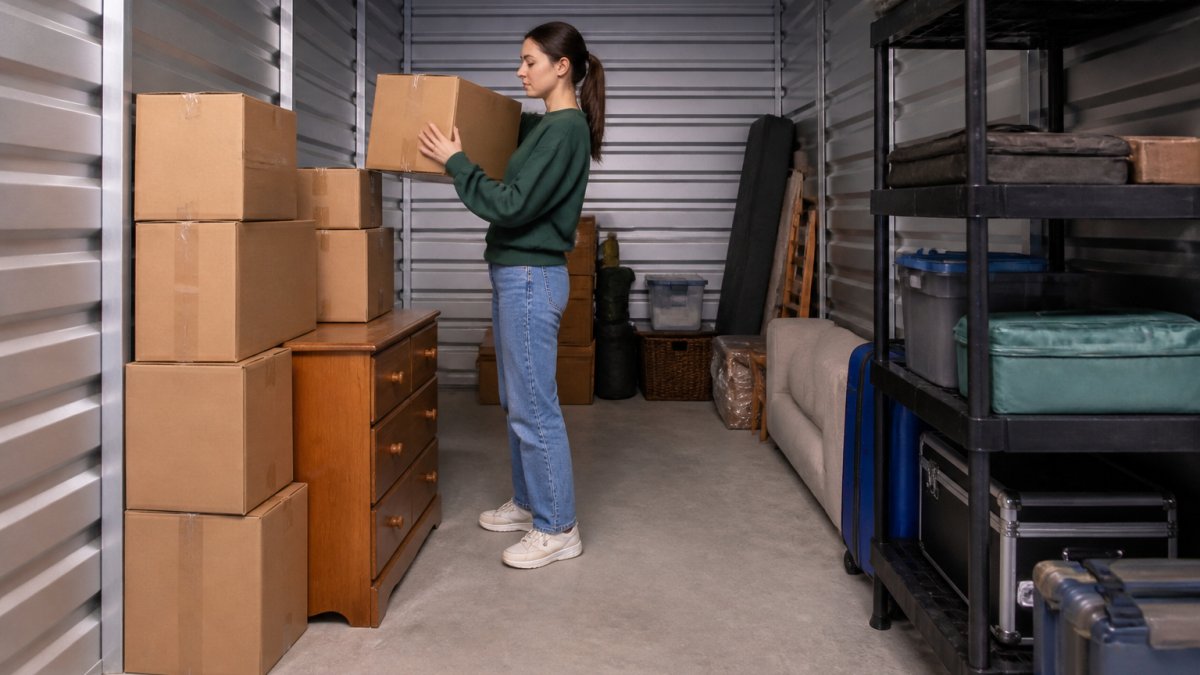
Use this setup:
- Label every box on two sides with contents and room of origin.
- Stack heavy totes low, light boxes on top.
- Leave a center aisle so you can reach the back wall without unloading.
- Keep a inventory list taped inside the door.
A common mistake is filling a 5x5 floor to ceiling with no walking path. You save nothing and lose access to half your belongings.
How to Compare Local Facilities Before You Rent
Comparing local facilities means checking more than the advertised rate. Security, pest control, access, and lease terms matter just as much as price, and they are where cheap storage stops being affordable. The goal is to compare facilities on the things that affect your belongings and your schedule, not just the number on the sign.
What to Verify, and How to Verify It
Run this checklist before you sign, and note that each item requires a specific question or an on-site look, not just a yes/no from a phone call:
- Gate and unit access: ask whether access is keypad-controlled, what type of lock the unit takes, and whether the property is well lit at night. Walk the property after dark if your schedule requires evening access.
- Security: ask whether cameras cover the drive aisles and entry points, whether staff is on site during office hours, and whether the perimeter is fenced. On-site staff during business hours is a meaningful difference from a fully unmanned facility.
- Pest control: ask how often the facility treats units and whether treatment is included or billed separately. Look for bait stations and sealed gaps at the unit door.
- Climate control: confirm the unit itself is climate controlled, not just the hallway. Ask what temperature range the facility maintains.
Access and Security Trade-Offs Worth Knowing
Extended gate hours and 24-hour access are convenient but can mean less staff presence and more traffic through the property. A facility with office-hours access and on-site staff may offer more oversight. Neither is automatically better, match the trade-off to how you will use the unit. If you visit monthly, office hours are usually enough; if you run a small business and need evening inventory access, confirm the gate hours before you commit.
How to Weigh Price Against Quality
A facility that is $15 cheaper per month but has no on-site staff, poor lighting, or a history of water intrusion is not the better deal. Ask each facility the same set of questions, record the answers side by side, and compare the total monthly cost against the quality items that matter most to you. Ask for the rate increase policy in writing, a low starting price with an annual jump costs more than a fair rate that holds steady.
Reserve Your Small Unit at Red D Stor
Finding the right small storage unit locally should take a phone call, not a week of paperwork. Red D Stor offers a secure facility, a simple rental process, and clear communication from your first question to move-in day. We serve residents, movers, and business owners around New Philadelphia and Dover with storage for household items, inventory, and equipment.
Here is what you get:
- Flexible month-to-month options for short moves and long stays
- A secure, well-lit facility close to home and work
- Straightforward answers about access, insurance, and lease terms
Call us, tell us what you are storing, and we will help you pick the right size the first time.
Frequently Asked Questions
Can you rent a storage facility for a week?
Many facilities offer month-to-month leases, and some will prorate a partial month, but true week-long rentals are less common. Renting a storage unit for a week usually means paying for the full month unless the facility advertises short-term or daily rates. Ask two things before you commit: whether the lease is month-to-month and whether any partial-month refund exists. For a move that wraps up in a few days, a month-to-month agreement on a small unit is typically the simplest path.
What size storage unit do I need for a few boxes and small furniture?
A 5x5 unit, roughly the size of a small closet, holds about 50 boxes plus a chair, lamp, or small dresser. If you are adding a mattress and a couple of larger pieces, move up to a 5x10. The most common industry size is 10x10, which accounts for 35.6% of revenue according to HireAHelper, but that is more space than a few boxes require. Measure your largest item first, then size up one step for walking room.
What should I check before renting a small storage unit?
Ask about the total monthly cost, not just the advertised rate: administration fees, insurance requirements, and lock charges all add up. Confirm the lease term and notice period, and ask whether rates have increased in the past year. Visit in person to check lighting, gate access, pest control, and whether the unit is climate-controlled if you are storing wood furniture, electronics, or family keepsakes. Get the access hours in writing.
How much should I pay for storage per month?
National averages give a rough benchmark but not a local quote. HireAHelper reported an average unit rent of $133 per month in 2026, and SpareFoot recorded average asking rent falling 10.7% year over year to $96.44 in Q4 2025. Small units sit below those figures, large units above. Pricing depends on unit size, climate control, access, and location, so request a current quote from the facility you are considering rather than budgeting from a national average.
Ready to clear the clutter? Get started with Red D Stor and reserve a clean, secure small storage unit that fits your belongings and your budget.