 blog
Finding Affordable Storage Units in New Philadelphia
Last Updated: November 2, 2026
Quick Summary
Finding affordable storage in New Philadelphia starts with knowing the national benchmark: SpareFoot's 2026 data puts a 10x10 non-climate-controlled unit at $119 per month on average. Compare total move-in cost, not just the sticker rate, and rent the smallest unit that fits your belongings.
- Unit size is the biggest lever on your monthly rate, so avoid renting larger than you need.
- Ask every facility for the total move-in cost, including admin fee, lock, and insurance.
- Climate control pays off for wood furniture, electronics, leather, artwork, and heirlooms.
- For a move, confirm the rental is month-to-month and ask about the notice period.
- Call or visit at least three facilities and record the same fields for each.
Table of Contents
- What Affordable Storage Actually Costs in New Philadelphia
- Storage Unit Prices: What Drives Your Monthly Rate
- Storage Unit Sizes: Matching the Unit to Your Belongings
- When Climate-Controlled Storage Is Worth the Extra Cost
- Storage for Moving: Short-Term Rentals Without the Long Lock-In
- How to Compare Storage Facilities Before You Reserve
- Reserve Your Unit at Red D Stor
- Frequently Asked Questions
What Affordable Storage Actually Costs in New Philadelphia
Affordable storage units in New Philadelphia start with understanding the national baseline before you ever call a facility. According to SpareFoot's 2026 self-storage pricing data, the national average for a 10-by-10-foot non-climate-controlled unit is $119 per month, down 0.8% year over year. That figure is a benchmark, not a local quote, but it gives you a realistic anchor when you compare rates around Tuscarawas County.
When comparing storage, the sticker rate is only part of the story.
Below, we break down what actually drives your monthly rate, how to size a unit correctly, and how to compare facilities without getting surprised at move-in. Keep reading, because the difference between a cheap unit and a good value often comes down to three line items most renters never ask about.
Storage Unit Prices: What Drives Your Monthly Rate
Monthly storage unit prices in New Philadelphia depend on four factors: unit size, climate control, location, and demand. A small non-climate-controlled unit will always cost less than a large climate-controlled one, and facilities closer to busy corridors tend to price higher than those a few minutes out.
Unit size is the biggest lever. Unit size is one of the main factors in your rate, so renting a unit larger than you need can raise your cost. Climate control adds a premium, and it's worth it for certain belongings (more on that below). Location and local demand set the floor and ceiling for everything else.
Move-In Costs Beyond the Sticker Price
The advertised monthly rate rarely tells the whole story. Ask every facility these questions before you reserve:
- Administrative fee: a one-time charge at signing, if applicable
- Lock purchase: some facilities require a specific lock
- Insurance or protection plan: some facilities require coverage, unless you show your own
- Rate increase policy: how often rates go up and by how much
- Late fees and lien terms: what happens if a payment slips
A unit advertised at one price can cost meaningfully more in month one once fees stack up. Get the total move-in number in writing.
Storage Unit Sizes: Matching the Unit to Your Belongings
The right storage unit size is the smallest unit that fits your belongings with a little room to walk in and reach them. Oversizing wastes money every month; undersizing forces a second unit or a stressful repack.
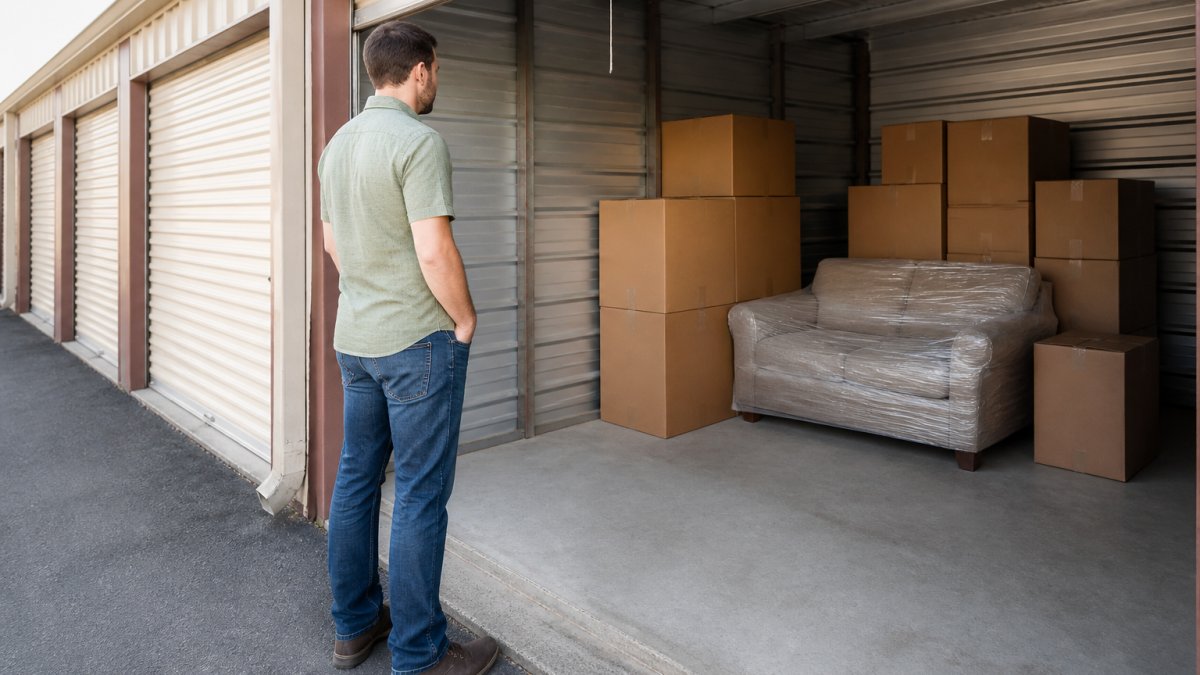
Small, Medium, and Large Units at a Glance
| Unit Size | Roughly Fits | Best For |
|---|---|---|
| 5x5 | A closet's worth: boxes, seasonal decor, small furniture | Seasonal gear, documents, small storage |
| 5x10 | A studio apartment or one bedroom | Small moves, business overflow |
| 10x10 | A one-bedroom home or two offices | Household storage, furniture sets |
| 10x20 | A two-to-three-bedroom home | Full moves, vehicle or equipment storage |
A 5x5 unit can handle holiday decorations, winter clothes, and a few boxes. A 10x10 is a common size for one-bedroom households. A 10x20 can fit the contents of a larger home or a car. For a deeper walkthrough, our guide on choosing the right storage unit size breaks down each option.
When Climate-Controlled Storage Is Worth the Extra Cost
Climate-controlled storage can be worth the extra cost when you're storing wood furniture, electronics, leather, artwork, photographs, or family heirlooms. These items can warp, crack, or degrade with temperature swings and humidity.
For plastic bins of seasonal clothes or lawn equipment, standard storage is fine. The premium only pays off when the replacement cost of your belongings exceeds the added monthly fee. If you're storing heirlooms or a business inventory of sensitive goods, climate control is the safer call.
Storage for Moving: Short-Term Rentals Without the Long Lock-In
Storage for moving works best on a short-term, month-to-month basis. If you're relocating to or from New Philadelphia and need a unit for three or four months while you close on a house, you want a rental with no long-term commitment.
Ask two questions up front: Is the rental month-to-month, and what's the notice period to move out? A facility that requires a 12-month contract will cost you if your timeline shifts. Our guides on short term storage rental options and how to rent storage without long contracts walk through what to look for.
How to Compare Storage Facilities Before You Reserve
Comparing storage facilities comes down to more than price: total move-in cost, unit size availability, security, access hours, climate options, and the rental agreement terms all matter. A cheap unit with poor security or a punitive contract is no bargain. The most useful comparison is a side-by-side worksheet you fill in for each facility you're considering.
A Side-by-Side Comparison Worksheet
Before you reserve, call or visit at least three facilities and record the same fields for each. This is the step most renters skip, and it's where the real differences show up.
| What to Compare | Why It Matters | What to Ask |
|---|---|---|
| Total move-in cost | The advertised rate hides fees | "What is my total due at move-in, including admin fee, lock, and insurance?" |
| Unit size and type | Indoor, outdoor, drive-up, climate-controlled | "Is this unit drive-up or indoor? Is it climate-controlled?" |
| Access hours | Limits when you can reach your belongings | "What are gate hours, and are they seven days a week?" |
| Security | Protects your belongings | "Do you have cameras, lighting, and on-site management?" |
| Contract terms | Controls your exit and rate risk | "Is it month-to-month? What's the notice period and rate increase policy?" |
| Insurance requirement | Adds to monthly cost | "Is protection required, and can I use my own coverage?" |
Facility Features and Access Policies to Verify
Features that look similar in an ad can differ sharply in practice. Confirm each of these directly:
- Climate control: ask whether the whole unit is climate-controlled or only certain buildings, and what temperature range is maintained.
- Access hours: gate hours vary widely; some facilities offer 24-hour access, others close early. Confirm whether holiday hours differ.
- Drive-up versus indoor: drive-up units let you unload directly at the door, which matters for heavy furniture and appliances. Indoor units may require carts and elevators.
- Security systems: ask about cameras at gates and corridors, exterior lighting, fencing, and whether a manager lives or works on site.
- Unit condition: check for signs of water intrusion, pest activity, and door alignment before you sign.
The Rental Process and Consumer Checklist
Many facilities let you reserve online, but a reservation is not the same as a signed lease. Before you commit:
- Get the full move-in total, including admin fee, lock, and insurance
- Confirm the rate increase policy in writing
- Ask about gate access hours and whether you need your own lock
- Check lighting, cameras, and on-site management
- Read the rental agreement for lien, late-fee, and notice terms
- Confirm payment methods and autopay options
- Ask what happens if you need to cancel or move out early
As documented in the FTC's guidance on consumer contracts, you have the right to read terms before signing. Our storage unit rental agreement tips cover the clauses that matter most.
Watch out: a reservation fee or deposit may be non-refundable if you cancel. Ask whether any quoted rate is guaranteed and for how long before you pay anything.
Reserve Your Unit at Red D Stor
Reserving a storage unit can be a straightforward process. Contact Red D Stor to discuss what you're storing and the rental options available.
Red D Stor is a locally focused facility serving New Philadelphia and Dover, offering a secure facility and a simple, flexible rental process.
Ready to see the steps? Our storage unit rental process guide walks you through reserving from start to finish. And for context on where the market is heading, Multi-Housing News forecasts project 43.6 million net rentable square feet of new national inventory by the end of 2026, which means more choice and more reason to compare carefully.
Finding affordable storage in New Philadelphia isn't about chasing the lowest advertised number. It's about matching unit size to your belongings, understanding the total move-in cost, and choosing a facility with clear terms and dependable security. Red D Stor offers a secure facility, a simple and flexible rental process, and locally focused service for residents and business owners in New Philadelphia and Dover. Get started with Red D Stor and reserve the right-sized unit for your household, inventory, or move.
Frequently Asked Questions
How much do storage units cost in New Philadelphia, Ohio?
Rates depend on unit size, features, and availability, so the best way to get an accurate figure is to check current pricing directly with the facility. Ask for the total move-in cost, including any admin fee or lock, before you reserve.
What size storage unit do I need for a one-bedroom apartment?
A 5-by-10 unit can hold the contents of a small one-bedroom apartment. If you are also storing appliances or a full dining set, move up to a 10-by-10. Bring an inventory list to the facility and staff can match it to a storage unit size, so you avoid paying for space you will not fill.
What should I compare when choosing affordable storage units?
Compare more than the monthly rate. Check the total move-in cost, access hours, security features such as lighting, and whether climate control is available. Confirm the lease terms, including whether month-to-month rental is offered and how rate increases are handled. Reading recent customer reviews and visiting the facility in person will tell you more than a price list alone.
Are climate-controlled storage units worth the extra cost?
They are worth it for items that heat, cold, and humidity can damage: wood furniture, leather, electronics, photos, documents, and family heirlooms. For yard equipment, holiday decorations in plastic bins, or sturdy tools, a standard unit usually works fine. If you are unsure, ask the facility about its climate control and weigh that against the value of what you are storing.