 how-to
9 Climate Control Mistakes That Ruin Stored Heirlooms
Last Updated: November 4, 2026
Quick Summary
Climate control storage is a storage environment where temperature and humidity are actively managed to stay within a steady range year-round, ideally 65-75°F and 45-55% relative humidity. That stability, not the equipment itself, is what protects wood, textiles, paper, and leather heirlooms from slow, cumulative damage.
- Aim for 65-75°F and 45-55% relative humidity for antiques, furniture, textiles, and paper.
- Above 60% relative humidity, mold and mildew risk climbs fast.
- Wrap heirlooms in breathable materials like cotton or acid-free tissue, never plastic against wood.
- Store photographs in acid-free sleeves and archival boxes, not shoeboxes or PVC albums.
- Check a hygrometer each visit and act if readings drift outside the target range.
Table of Contents
- Why Climate Control Storage Decides Whether Heirlooms Survive
- Climate-Controlled Storage Temperature and Humidity: The Numbers That Matter
- Climate-Controlled vs. Non-Climate-Controlled Storage: Which Unit Fits Your Belongings
- Which Family Heirlooms Are Most Vulnerable to Temperature and Humidity Swings
- How to Pack Furniture for Storage Without Trapping Moisture
- Long-Term Storage for Photographs and Documents
- Monitoring Conditions Inside the Unit and Spotting Damage Early
- Pest, Disaster, and Insurance Protection for Stored Valuables
- Reserving a Climate-Controlled Unit for Your Heirlooms
- Frequently Asked Questions
Why Climate Control Storage Decides Whether Heirlooms Survive
Most people assume family heirlooms fail in storage because of a single disaster: a burst pipe, a fire, a break-in. In reality, the damage is usually slow, invisible, and entirely preventable. The difference between a piece that survived storage and one that quietly fell apart often comes down to one thing: whether the air around it stayed stable.
Climate control storage is a storage environment where temperature and humidity are actively managed to stay within a steady range year-round. That stability, not the equipment itself, is what protects old materials.
Here's the uncomfortable truth most storage guides skip: a wooden dresser or a wool quilt doesn't need to be cold or dry. It needs to stay the same. Every swing in temperature and moisture forces old materials to expand, contract, and absorb water they can't release. Do that a few hundred times over a year and the damage compounds.
Below, we'll walk through the nine mistakes that ruin stored heirlooms, the numbers worth knowing, and how to pack and monitor your belongings so they come out the way they went in.
What Heat, Cold, and Moisture Actually Do to Old Materials
Heat speeds up chemical breakdown. It dries out wood and glues, makes old varnish brittle, and accelerates fading in photographs and textiles. Cold slows decay, but it's not automatically safe. Freezing temperatures can make adhesives crack and cause condensation when the item warms back up.
Moisture is the bigger threat. Wood, paper, and fabric are hygroscopic, meaning they pull water from the air and hold it. When humidity rises, these materials swell. When it drops, they shrink. Wooden joints loosen, veneer lifts, paper cockles, and textiles grow musty.
The damage is cumulative. A single humid summer won't destroy a cedar chest. Five humid summers in a row, with dry winters in between, will.
Climate-Controlled Storage Temperature and Humidity: The Numbers That Matter
The short answer: aim for a temperature range of 65-75°F and relative humidity between 45-55%. Those are the widely accepted targets for storing antiques, wooden furniture, textiles, and paper. Some institutions stretch the acceptable temperature band to 55-80°F, but the narrower the swing, the better.
Relative humidity is the amount of water vapor in the air expressed as a percentage of what the air could hold at that temperature. (Discussion on Humidity) It's the number that matters most for heirlooms, because it drives whether materials absorb or release moisture.
A few practical targets to keep in mind:
- Below 45% RH: paper and leather can dry out and crack; wooden joints may shrink
- 45-55% RH: the safe middle for most mixed collections
- Above 60% RH: mold and mildew risk climbs fast
- Above 65% RH: active mold growth becomes a real concern
Temperature stability matters just as much as the number itself. A unit that holds 68°F all year beats one that swings between 55°F and 85°F, even though both "average" to a reasonable figure. The National Park Service's guidance on environmental monitoring is a good reference for how conservators think about stable conditions.
Climate-Controlled vs. Non-Climate-Controlled Storage: Which Unit Fits Your Belongings
The honest answer is that not everything needs climate control. A plastic tote of holiday decorations will survive a standard unit fine. A mahogany sideboard or your grandmother's wedding dress will not.
Standard storage follows outdoor conditions. It gets hot in summer, cold in winter, and humid when it rains. That's fine for durable goods: tools, lawn equipment, plastic bins, metal shelving, business inventory in sealed packaging.
Climate-controlled storage holds a steady temperature and humidity range year-round. It costs more, and it's the right call for anything made of wood, fabric, paper, leather, or natural fibers.
Here's a quick decision guide:
| Your Belongings | Standard Unit | Climate-Controlled Unit |
|---|---|---|
| Plastic bins, seasonal decor | Good fit | Unnecessary |
| Metal tools and equipment | Good fit | Unnecessary |
| Wooden furniture, antiques | Risky | Best fit |
| Textiles, quilts, wedding dresses | Risky | Best fit |
| Photographs, documents, books | Risky | Best fit |
| Leather goods, musical instruments | Risky | Best fit |
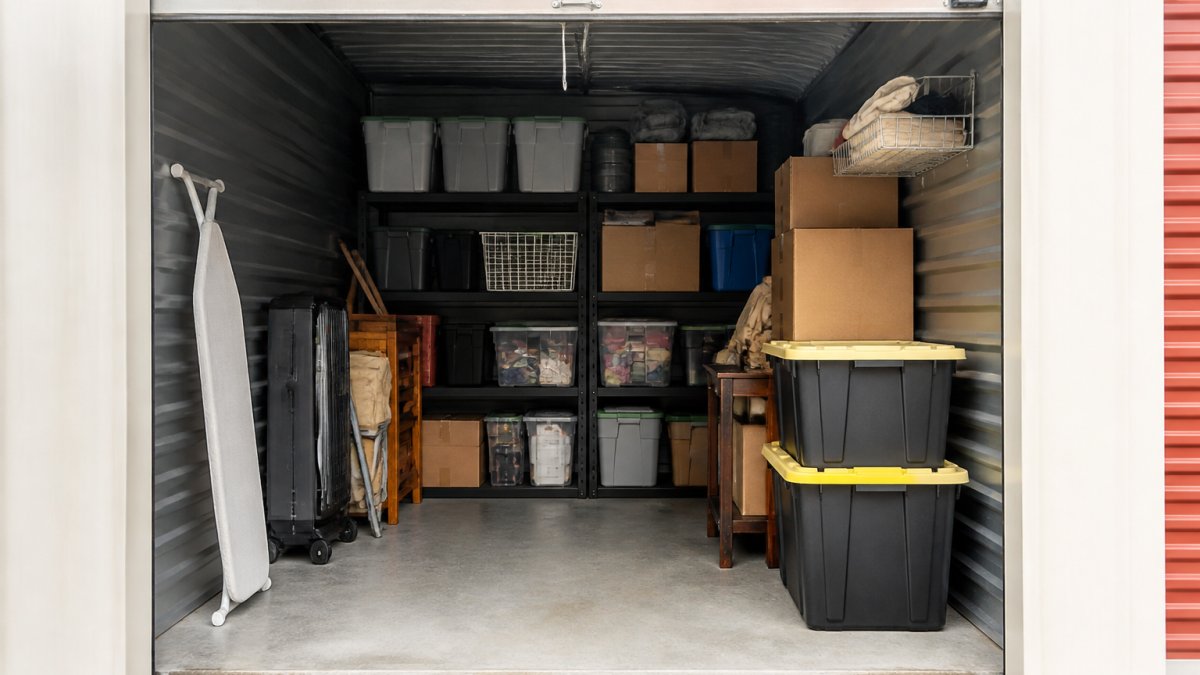
Watch out: a climate-controlled unit only helps if you don't block airflow. Stacking boxes against the vents or cramming furniture tight to the walls creates dead zones where humidity collects, and that defeats the purpose.
If you're weighing unit types for furniture specifically, our guide to secure furniture storage requirements lays out what to check before you commit.
Which Family Heirlooms Are Most Vulnerable to Temperature and Humidity Swings
Some materials tolerate fluctuation better than others. Knowing which category your heirlooms fall into tells you how much protection they need.
Wooden furniture and antiques top the list. Solid wood moves with humidity, and old joinery is already stressed. Veneer, inlay, and marquetry are especially fragile because different materials expand at different rates.
Textiles come next. Wool, silk, cotton, and linen all absorb moisture. Quilts, wedding dresses, uniforms, and tapestries are prone to mildew, yellowing, and fiber weakening.
Photographs and documents are highly sensitive. Paper cockles and foxing appears in high humidity, while emulsions can crack in dry air.
Leather and musical instruments round out the high-risk group. Leather dries and cracks; instruments warp and lose tuning stability.
Lower-risk items include glass, ceramics, and most metals, though metal can still rust in high humidity.
How to Pack Furniture for Storage Without Trapping Moisture
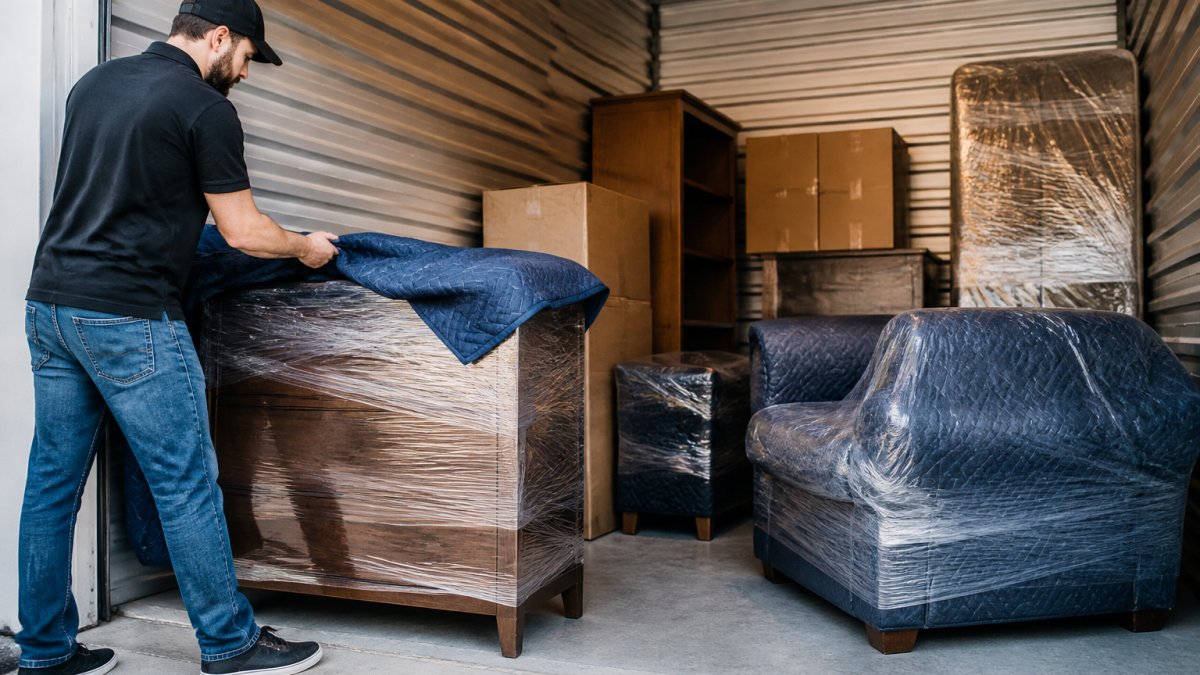
The biggest packing mistake is sealing an item so tightly that trapped moisture can't escape. Plastic wrap and shrink wrap feel protective, but they can trap condensation against wood and finish. Breathable materials do the job better. The second mistake is treating every heirloom the same. A cedar chest, a wedding dress, a stack of letters, and a silver tea set each fail in different ways, so the packing method should change with the material.
Here is the general sequence that applies to almost everything, followed by material-specific instructions.
- Clean and dry everything completely. Wipe down wood, vacuum textiles, and let all items air-dry before packing. Any moisture you seal in stays in.
- Remove what you can. Take off cushions, hardware, and removable legs to reduce stress on joints.
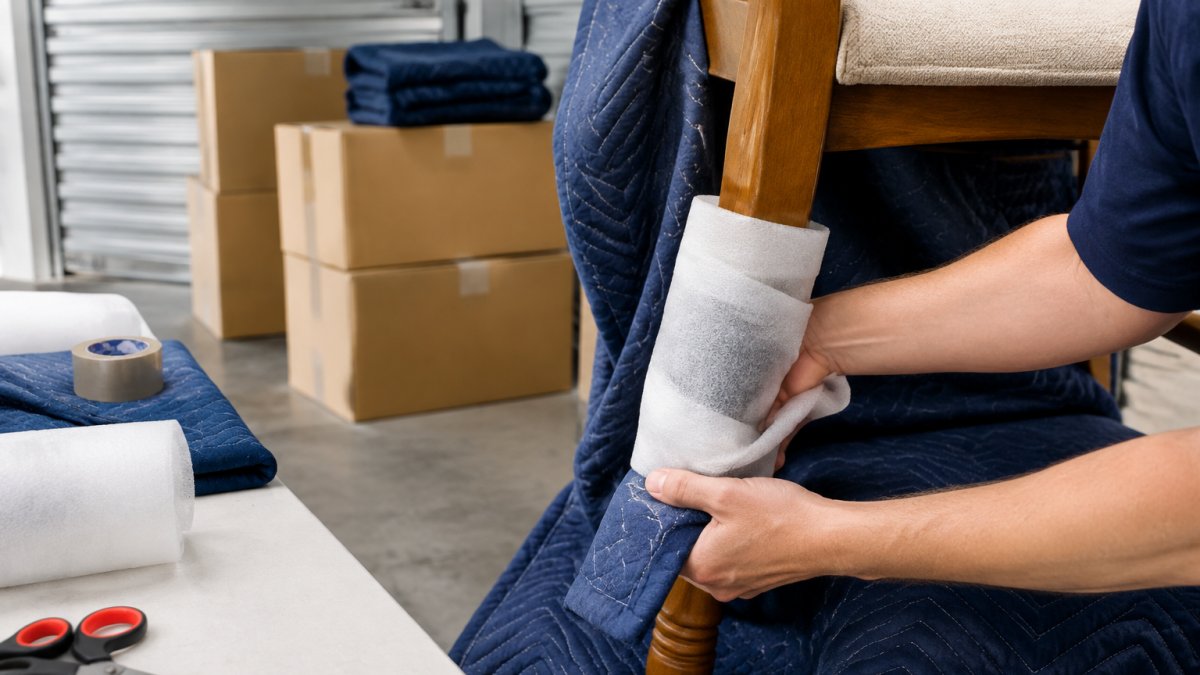
- Wrap in breathable material first. Use cotton sheets, unbleached muslin, or acid-free tissue against the surface. Skip plastic directly against wood.
- Pad corners and edges. Cardboard corner protectors and moving blankets absorb bumps.
- Use furniture covers, not plastic. A breathable furniture cover lets air move while keeping dust off.
- Leave a little space. Don't push furniture flush against walls. Air needs to circulate.
For a full walkthrough, our step-by-step furniture packing guide covers each stage in detail.
Wooden Furniture and Antiques
Wood needs to breathe. Wrap it in breathable fabric, keep it off the concrete floor with pallets or blocks, and avoid stacking heavy items on top. If a piece has drawers, leave them slightly open to prevent trapped air. Remove glass shelves and mirrors from cases before moving them, and label any detached hardware in a bag taped to the underside of the piece so it stays with the furniture. For veneered or inlaid pieces, avoid wrapping tightly with stretch film; the film can lift edges when it is removed.
Textiles, Quilts, and Wedding Dresses
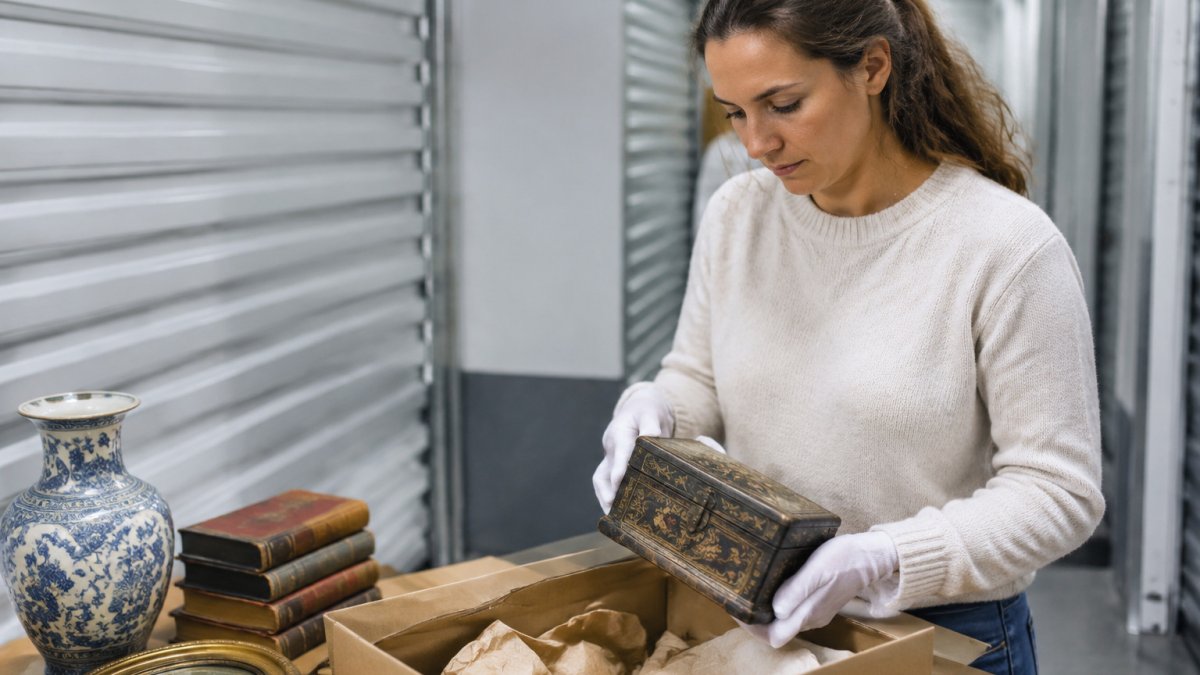
Never store textiles in plastic bags or airtight bins. Use acid-free boxes and layer with acid-free tissue. Fold quilts loosely and refold them periodically to prevent permanent creases. Wedding dresses should be cleaned before storage, since invisible sugars and oils attract pests and stain over time. Pad the folds of a dress with acid-free tissue so the fabric does not crease against itself, and avoid hanging a heavy gown from its straps for months, which stretches the shoulders.
Photographs, Documents, and Books
Paper is more fragile than most people realize. Store photographs in acid-free sleeves and archival boxes, not shoeboxes or standard photo albums with PVC pages. Keep documents flat or in acid-free folders, and stand books upright rather than laying them flat in a stack, which stresses the spines. Label boxes with contents and dates so you're not digging through everything later. Keep paper items out of the attic and garage, where temperature and humidity swing wildly.
Metal, Ceramics, and Glass
Metal is lower-risk but still rusts in high humidity. Wipe metal dry, avoid wrapping it in newspaper (the ink can transfer), and use acid-free tissue or clean cotton. For silver, avoid rubber bands and plastic wrap, which can leave marks; a cotton bag or acid-free box is safer. Wrap ceramics and glass individually in acid-free tissue or bubble wrap, pad the box so items cannot shift, and pack plates on edge rather than flat. Label boxes "fragile" and keep them off the floor.
Electronics and Mechanical Keepsakes
Old radios, clocks, cameras, and record players need different handling. Remove batteries before storage to prevent leakage, dust the item, and wrap it in breathable material rather than sealing it in plastic. For clocks with pendulums, secure or remove the pendulum before moving. Mechanical items benefit from being wound down or left in their recommended rest position, so check the manufacturer's guidance if you have it.
If you want broader guidance on protecting furniture before you pack, our article on storing furniture safely without damage covers the prep work.
Long-Term Storage for Photographs and Documents
Paper is more fragile than most people realize. Photographs, letters, certificates, and business records all need the same three things: stable humidity, stable temperature, and protection from light.
Store photographs in acid-free sleeves and archival boxes, not shoeboxes or standard photo albums with PVC pages. Keep documents flat or in acid-free folders. Label boxes with contents and dates so you're not digging through everything later.
Avoid the attic and the garage for these items. Both swing wildly in temperature and humidity. A climate-controlled unit gives paper the stable environment it needs for long-term storage.
Monitoring Conditions Inside the Unit and Spotting Damage Early
You can't manage what you don't measure. A simple hygrometer, an inexpensive device that reads temperature and humidity, tells you whether your unit is holding its range. Check it on each visit and note the readings. A basic hygrometer is enough to spot a trend, but a data logger that records readings over time is more useful because it captures the swings that happen between visits, including overnight and during weather changes.
Place the device where it reads the air your heirlooms actually sit in, not next to the door or directly under a vent. A common pattern is to set it at mid-height on a shelf or on top of a box near the center of the unit, away from exterior walls and the ceiling. If you store items at floor level, add a second reading there, because cold concrete and low corners can run damper than the rest of the unit.
Record the readings each time you visit, along with the date and the outdoor weather if you know it. A paper log or a note on your phone is enough. What you are looking for is not a single perfect number but a stable pattern. If the unit holds roughly 65-75°F and 45-55% relative humidity across seasons, it is doing its job. If readings drift outside that band, act before damage shows up.
When readings leave the target range:
- Humidity above 60%: check for blocked vents, boxes pushed against walls, or a door that is not sealing. Move items to restore airflow and report the reading to the facility. If it stays high, consider a dehumidifier only if the facility allows it, and ask whether the unit's system is working as intended.
- Humidity below 45%: paper, leather, and wood can dry and crack. Avoid adding moisture yourself; instead, ask the facility to check the system and keep the unit door closed as much as possible.
- Temperature swings: note whether the swing follows outdoor weather. A unit that tracks outdoor conditions closely is not holding its range, and that is a conversation to have with the facility manager.
Early warning signs of environmental damage:
- A musty or sour smell when you open the door
- White or gray fuzz on fabric or leather
- Warped wood, lifting veneer, or loose joints
- Curling or discolored paper edges
- Condensation on metal hardware or plastic bins
Catch these early and you can often stop the damage. Ignore them and it spreads. Photograph anything suspicious before you move it, both for your own records and in case you need to make a claim.
One limit worth stating plainly: climate-controlled self-storage is not archival preservation. It narrows temperature and humidity swings, but it does not filter air, control light, or provide the fire suppression and pest control of a museum storage room. For irreplaceable items, a conservator or a specialized fine-art storage facility may be the better choice. A conservator can also advise on whether a piece is stable enough to store at all. Use self-storage climate control as a strong middle ground, not as a substitute for professional conservation.
Pest, Disaster, and Insurance Protection for Stored Valuables
Pests love stored textiles and paper. Mice, silverfish, and carpet beetles cause damage that's often discovered too late. Keep food out of units, store textiles clean, and inspect boxes for droppings or chewed edges on each visit.
For disaster protection, keep heirlooms off the floor, avoid stacking against exterior walls, and don't store anything directly under ceiling vents or pipes.
On insurance: most storage facilities require you to carry your own coverage for stored goods. Check whether your homeowner's or renter's policy extends to off-site storage, and document your valuables with photos and a written inventory before you move them in. That record is what makes a claim possible.
Reserving a Climate-Controlled Unit for Your Heirlooms
Getting the right unit comes down to matching size and conditions to what you're storing. Measure your largest pieces, estimate box count, and leave room for airflow.
Red D Stor offers a simple, straightforward rental process. Our team helps you pick the right unit size, explains what's included, and gets you moved in without a hassle. We're local to the area, so you're not dealing with a call center. Our unit size guide helps you estimate what you need, and our rental process walkthrough shows exactly what to expect from start to finish.
Frequently Asked Questions
What qualifies as climate control storage?
A climate control storage unit holds temperature and humidity within a set range year-round instead of letting them swing with the weather. In practice that means heating in winter, cooling and dehumidification in summer, and a target band of roughly 65-75°F with 45-55% relative humidity. Standard units get no such treatment, so a July afternoon can push interior temperatures well past 90°F and winter cold can drop below freezing. Ask a facility how it maintains the range and whether staff monitor it, because the label alone tells you nothing.
Is climate-controlled storage worth it for family heirlooms?
For anything made of wood, paper, textile, or leather, yes. Those materials expand and contract as temperature and humidity shift, and repeated cycling causes veneer to lift, joints to loosen, photos to curl, and mold to start in humid spells. If your unit holds flat-pack shelving and plastic totes, a standard unit is fine. If it holds grandmother's dresser, pay for the controlled space.
Can photographs and documents go in a climate-controlled unit?
Yes, and they should. Paper and photographic emulsions are the most humidity-sensitive items most families store. Keep relative humidity in the 45-55% band, use archival boxes and acid-free folders rather than cardboard or garbage bags, and keep everything off the concrete floor on pallets or shelving. Store albums flat rather than upright so pages do not sag, and never seal prints in airtight plastic, which traps moisture against the image. Scan the irreplaceable pieces first so a loss is inconvenient rather than permanent.
How often should I check on heirlooms in storage?
Visit every two to three months, and always after a severe storm or a long stretch of extreme weather. On each visit, look for condensation on the inside of unit walls, a musty smell, white or green spotting on leather and fabric, warping in wood, and any sign of rodent droppings or insect frass. Run a hand along furniture tops and check the corners of boxes. Bring a cheap hygrometer and log the reading so you can spot a trend instead of guessing. Early mold shows up as a smell long before it shows up as a stain.
Storing heirlooms well isn't complicated, but it does take intention. The right unit, breathable packing, and a quick check on each visit will protect the things you can't replace. Get started with Red D Stor and give your family keepsakes the stable, secure environment they deserve.