 blog
Self Storage Near New Philadelphia Ohio: 7 Facts to Check
Last Updated: November 10, 2026
Quick Summary
Self storage near New Philadelphia in Ohio depends on four checks: unit size matched to your belongings, climate control for sensitive items, facility security and access, and a written quote listing every fee. Red D Stor serves residents and businesses in New Philadelphia, and pricing varies by unit size, facility, and rental length, so request a current quote to confirm your cost.
- Measure your largest items first and leave two to three feet of walkway in the unit.
- Climate control helps protect wood furniture, photographs, documents, electronics, and instruments from humidity and temperature swings.
- Ask whether the rate is introductory, since rates can change over time.
- Compare total cost by adding one-time fees to the first month's rent, not just the monthly rate.
- Review your homeowner's or renter's policy to see whether it covers off-site storage.
Table of Contents
- What Self Storage Near New Philadelphia Ohio Covers
- Storage Unit Sizes and Capacity: Matching a Unit to Your Belongings
- Climate-Controlled Storage Near New Philadelphia for Heirlooms and Electronics
- Security, Lighting and Facility Access to Compare
- Rental Terms, Short-Term Stays and Total Cost
- Pest Prevention, Water Damage and Insurance Questions
- Serving Residents, Movers and Local Businesses in Tuscarawas County
- Reserving Your Unit at Red D Stor
- Frequently Asked Questions
What Self Storage Near New Philadelphia Ohio Covers
Looking for self storage near New Philadelphia in Ohio usually comes down to a few practical questions: how big a unit you need, whether your belongings need climate control, how secure the facility is, and what you will actually pay over time. Red D Stor, a self-storage provider serving residents and businesses in New Philadelphia, put this guide together to help you check the details before you rent.
Self-storage pricing varies by unit size, the facility, and the length of your rental, so the most reliable way to know what you will pay is to request a current quote from Red D Stor.
Below, we walk through seven facts to check, including unit sizing, climate control, security, rental terms, and insurance. The goal is simple: help you compare facilities on the points that actually affect your belongings and your budget.
Storage Unit Sizes and Capacity: Matching a Unit to Your Belongings
The right unit size is the single biggest factor in keeping your costs reasonable. Renting too large wastes money every month, and renting too small means stacking items in ways that damage them or block access. Pricing generally depends on the size you choose, so getting the size right matters.

A useful habit is to measure your largest items first, such as a sofa or a dresser, and build outward from there. Leave a walkway of roughly two to three feet so you can reach items without moving everything. Stacking boxes against the back wall and keeping heavier items low will also make the unit easier to use over time.
A Practical Size Guide by Scenario
Unit sizes are usually quoted by dimensions, and the same label can vary between facilities. Ask for the actual dimensions in feet before you rent. The scenarios below are a general starting point, not a guarantee, always confirm the usable floor space with the facility before renting. See a size guide for small units to see what fits in each small footprint.
Estimating Space for Household Items and Furniture
Household storage usually follows a few patterns. Seasonal decorations and winter clothing are often a small load, while a full household of furniture typically needs a larger space. Many renters find it helpful to tape out the unit's dimensions on the floor of a room at home before moving anything in, a 10x10 taped on a driveway is a quick reality check.
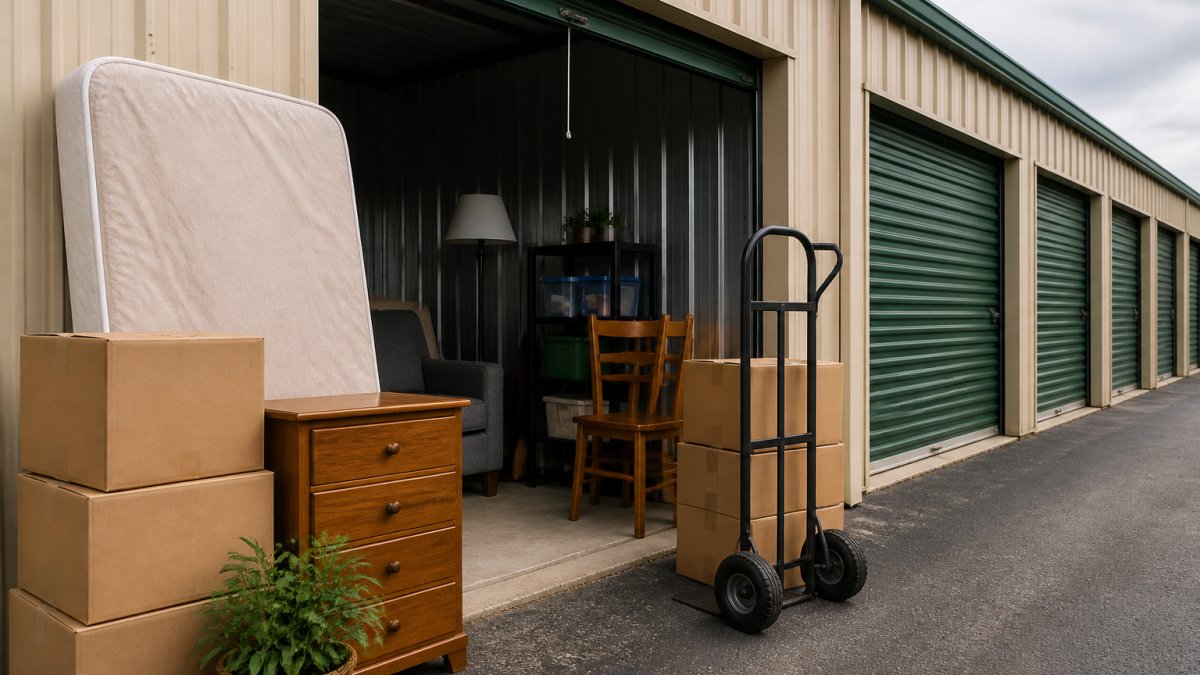
Furniture needs extra care. Learn how to store furniture safely without damage before you move anything in. Disassemble tables and bed frames where you can, wrap upholstered pieces, and keep mattresses off the floor. Pack the items you will need last toward the back of the unit and the items you may need soon near the door. Follow a step-by-step guide to packing furniture for storage once you have estimated the space. If you are unsure between two sizes, ask the facility whether you can move to a larger unit later and how any change would be billed.
Watch out: Units labeled with the same nominal size can differ in ceiling height and door width, so measure the door opening if you are storing a sofa or appliance that barely fits.
Sizing for Business Inventory and Trade Equipment
Business storage follows different rules. Inventory is often stored in uniform cartons, which stack efficiently but require clear aisles for retrieval. Tools and heavy equipment need floor space and sturdy shelving, and they may need to be secured against shifting. The right size for a small retailer or contractor depends on how high you can stack and what the facility's rules allow for shelving; confirm those details before you rent.
Before you rent, estimate how often you will access the unit. Frequent pickups favor a unit with easy access near the entrance, while long-term archives can sit further back. Keep records of what you store, including counts and dates, so you can reconcile inventory quickly when you need it. If your inventory turns over seasonally, ask the facility about its term options so you are not locked into a size you outgrow.
Climate-Controlled Storage Near New Philadelphia for Heirlooms and Electronics
Not everything belongs in a standard unit. Wood furniture, photographs, documents, leather goods, musical instruments, and electronics are sensitive to humidity and temperature swings, and those swings are common in Ohio, where summers are humid and winters are cold. Climate-controlled storage generally keeps conditions more stable, which can help reduce the risk of warping, mold, and corrosion.
A common mistake is to assume that a sealed box protects against moisture. In a non-climate-controlled unit, humidity can still build up inside boxes and cause mildew. If you store heirlooms, use breathable containers, keep items off concrete floors, and leave a little air space between items and walls.
Ask any facility whether its climate control covers the whole building or only certain units, and whether it monitors conditions. Those answers vary, so verify them directly before you sign a rental agreement.
Security, Lighting and Facility Access to Compare
Security is one of the most important comparison points, and it is also one of the hardest to judge from a website alone. When comparing facilities, look for a clearly marked, well-lit property, controlled gate access, and camera coverage. Ask each facility whether units have individual locks or whether you must provide your own, and whether gate hours match the times you expect to visit.
Visit in person if you can. Walk the property at dusk if you can and check the lighting, the condition of the gates, and how the office handles visitors. Ask about access hours and whether you need an appointment to reach your unit. These details matter most when you are retrieving items on short notice.
Rental Terms, Short-Term Stays and Total Cost
The advertised rate is rarely the full cost. Before you commit, ask about administrative or move-in fees, late payment charges, rent increase policies, and how much notice you must give to move out. Many renters are surprised by rate changes over time, so ask directly how and when rates can change.
The Line Items That Make Up Your Total Cost
A written quote should list every charge, not just the headline rent. The common line items to ask about are:
- Monthly rent: The quoted rate for the unit you choose. Ask whether the rate is introductory and when it may change.
- Administrative or move-in fee: Ask whether a one-time charge applies at signing.
- Security deposit: Ask whether a deposit is required, whether it is refundable, and what conditions apply.
- Lock: Ask whether the facility requires a specific lock or lets you bring your own.
- Insurance or protection plan: Ask what coverage the facility requires and whether your own homeowner's or renter's policy covers off-site storage. Read any plan's limits carefully.
- Late fees and lien terms: Ask what happens if a payment is late and how much grace period applies. Review the rental agreement for the timeline.
- Rent increases: Ask how often rates can change and how much notice you receive.
When comparing two facilities, add any one-time fees to the first month's rent and compare that total, not just the monthly rate.
Short-Term Stays and Notice to Move Out
Short-term storage is useful for people relocating or waiting on a house closing. Ask whether a month-to-month agreement is available and what the minimum term is. Month-to-month arrangements generally require advance notice before you move out, so ask how much notice is needed and whether rent is owed during the notice period.
If you are storing during a home sale or a job transition, ask two questions up front: Can I give notice mid-month, and is rent prorated? The answers vary by facility and can affect your total cost over a short stay.
Watch out: Introductory or promotional rates often apply only to the first month and may require autopay; confirm the rate for later months in writing before you sign.
Billing, Autopay and Cancellation
Storage rentals are commonly billed monthly, and many providers offer autopay. Ask whether autopay is available or required, whether a declined payment carries a fee, and how you will be billed if you cancel autopay.
Pricing depends on factors such as unit size, the length of the rental, and any current promotions, so request a written quote that lists every charge. Keep the quote and the signed agreement together, if a charge appears later that was not on the quote, you will have the paperwork to resolve it.
The advertised rate is rarely the full cost, so check each charge on the written quote before you commit.
| Line item | What to ask | Why it matters |
|---|---|---|
| Monthly rent | Whether the rate is introductory and when it may change | Rates can rise over time |
| Administrative or move-in fee | Whether a one-time charge applies at signing | Adds to the first month's total |
| Security deposit | Whether it is refundable and what conditions apply | Affects upfront cash needed |
| Insurance or protection plan | What coverage is required and its limits | Your own policy may not cover off-site storage |
| Late fees and lien terms | How much grace period applies | Late payments can trigger charges |
| Rent increases | How often rates change and how much notice is given | Helps you budget for longer rentals |
Pest Prevention, Water Damage and Insurance Questions
Pests and water are the two issues renters worry about most, and both are worth asking about before you rent. Ask how the facility handles pest control. Inside your unit, keep food out, use sealed plastic bins instead of cardboard where possible, and check items periodically.
Water damage is harder to prevent than pests. Keep items elevated off the floor, avoid storing anything directly against an exterior wall, and inspect your unit after heavy rain. Insurance is also a separate question. Some facilities offer protection plans, and these may not cover your belongings fully. Review your homeowner's or renter's policy, and check whether it covers off-site storage. If you run a business, talk with your insurer about inventory coverage before moving stock into a unit.
Serving Residents, Movers and Local Businesses in Tuscarawas County
Storage needs in Tuscarawas County vary widely. Homeowners may need space for seasonal items or furniture while they renovate or downsize. Movers and relocating families may need flexible space while they settle into a new home. Local businesses may need secure space for inventory, records, or equipment.
Each group may benefit from different features. Families may prioritize climate control and easy access, while tradespeople may need space for heavier tools. If you fall into more than one group, look for a facility that offers several unit sizes so you can adjust as your needs change.
Reserving Your Unit at Red D Stor
Choosing a facility is easier when you have a clear checklist: the right unit size, the climate control your belongings need, a secure and well-lit site, transparent rental terms, and clear answers on insurance. Compare each facility against the same list so the differences stand out.
If you are ready to look at options, contact Red D Stor to ask about unit availability, current rates for your unit size, and the rental terms that apply. Rent Now to get started.
Red D Stor provides self-storage for residents, business owners, and movers in New Philadelphia, Ohio, with a focus on secure, straightforward rentals.
Frequently Asked Questions
How much does self storage near New Philadelphia cost?
Monthly rent depends on unit size, the length of the rental, whether you need climate control, and the timing of your move-in. Because prices change, the most accurate figure is the current quote for the unit you need. Visit the Red D Stor website or call the facility to get a price for your specific size. Ask whether any move-in promotions apply, and confirm in writing what is included in the rate and what fees could be added later, so you can compare the total cost of storing your belongings, not just the advertised monthly rate.
What size storage unit do I need for my belongings?
Start by listing the largest items you plan to store, such as a sofa, mattresses, or a dresser, and estimate how much floor space they take up. A small unit usually fits the contents of a single room, a medium unit can hold a typical apartment's worth of furniture, and a larger unit suits a full household or business inventory. Leave walking space between stacks so you can reach items later. If you are unsure, ask the facility staff to help you match your list to a unit size before you reserve.
Are there climate-controlled storage units near New Philadelphia?
Climate-controlled storage keeps the temperature and humidity inside a unit more stable than standard storage, which helps protect wood furniture, electronics, papers, photographs, and family keepsakes from swings in heat and moisture. Contact Red D Stor to ask about current availability of climate-controlled units. When you call or visit, ask how climate control is provided, what conditions it maintains, and whether it is available in the size you need.
What should I compare when choosing a self-storage facility?
Compare unit sizes and availability, the current monthly rate and any fees, whether climate control is offered, access hours and drive-up access, lighting and camera coverage, gate and keypad security, and how the rental agreement handles short stays and rate changes. Ask how the facility responds to pests and water issues, and whether it offers or recommends insurance for stored goods. Writing these points down for each facility makes side-by-side comparison far easier.