 Ultimate guide
The Small Storage Unit Size Guide for Renters
Last Updated: November 8, 2026
Quick Summary
A small storage unit is a compact self-storage space between 25 and 50 square feet, sized from 5x5 to 5x10, that holds closet, bedroom, or studio apartment overflow. A 5x5 fits 20 to 30 medium boxes, a 5x7 holds a bedroom's contents, and a 5x10 fits a one-bedroom apartment's furniture.
- Unit dimensions are written as width by depth, with ceilings around 8 feet in most facilities.
- A 5x10 unit's 2-foot access aisle consumes 20 square feet, 40 percent of the floor.
- A studio apartment typically needs a 5x10 unit for its full contents.
- Stand mattresses on edge against a wall and wrap them in breathable covers, not plastic.
- The average storage-unit rent was reported at $133 per month by HireAHelper.
Table of Contents
- Why Small Storage Units Solve Big Space Problems
- The Storage Unit Size Chart: Small, Medium, and Large at a Glance
- What Fits in a 5x5 Storage Unit
- What Will a 5x7 Storage Unit Hold
- The 5x10 Unit: The Most Versatile Small Option
- Using a Storage Unit Size Calculator Without Guessing
- Matching Unit Size to Apartment and Home Size
- Measuring Your Belongings Before You Rent
- A Practical Packing and Loading Plan for Small Units
- Access Frequency and Aisle Planning
- Climate Control and Item-Specific Storage Needs
- Realistic Capacity Assumptions and Cost Trade-Offs
- Special Items, Restrictions, and Vehicle Storage Limits
- Reserving Your Small Storage Unit at Red D Stor
- Frequently Asked Questions
Why Small Storage Units Solve Big Space Problems
A small storage unit is a compact self-storage space, typically between 25 and 50 square feet, designed to hold the overflow from a closet, a spare bedroom, or a one-car garage. In 2026, about 53 million square feet of new self-storage space were planned for completion, 9.2% less than 2025 deliveries, according to StorageCafe's self-storage industry statistics.
Many people ask whether they really need a whole unit for holiday decorations and winter coats. Often, a smaller unit is enough, and you avoid paying for square footage you will never fill.
Below, we break down every small size, what actually fits, and how to measure before you sign anything. The payoff is simple: the right small unit costs less, loads faster, and keeps your belongings easier to reach.
The Storage Unit Size Chart: Small, Medium, and Large at a Glance
Storage units fall into three broad categories: small units from 5x5 to 5x10, medium units from 5x15 to 10x15, and large units from 10x20 to 10x30. Small units suit closet and bedroom overflow, medium units hold a studio or one-bedroom apartment, and large units fit a full household or a vehicle.
| Unit Size | Square Feet | Roughly Equivalent To | Best For |
|---|---|---|---|
| 5x5 | 25 | A small closet | Seasonal decor, boxes, clothing |
| 5x7 | 35 | A walk-in closet | Bedroom contents, small furniture |
| 5x10 | 50 | A large closet or half-garage | Studio or one-bedroom apartment |
| 10x10 | 100 | A one-car garage | Two-bedroom apartment |
| 10x20 | 200 | A one-car garage plus workspace | Three-bedroom home |
| 10x30 | 300 | A large garage | Full house, business inventory |
Square Feet
One caveat before you scan that chart: square footage alone does not tell you what fits. The right size depends on the number, dimensions, and arrangement of your belongings, not just the room count of your home.
For the full range beyond small units, our choosing the right storage unit size guide walks through every size from locker to warehouse.
How to Read Unit Dimensions: Width, Depth, and Height
Unit dimensions are written as width by depth, with height assumed at roughly 8 feet in most facilities. A 5x10 unit is 5 feet wide and 10 feet deep, giving you a narrow corridor you walk into rather than a square room. Width governs what you can carry through the door; depth governs how far you walk to reach the back.
Height is the underrated dimension. Standard units run about 8 feet to the ceiling, which means you can stack boxes four to five high along the walls. That vertical space is why a 50-square-foot unit holds far more than the floor plan suggests. Ask about ceiling height before you assume a unit is too small.
What Fits in a 5x5 Storage Unit
A 5x5 storage unit holds the contents of a small closet: roughly 20 to 30 medium boxes, a set of seasonal decorations, off-season clothing, and a few small pieces of furniture. Think of it as a walk-in closet without the hanging rod, and you have the right mental picture.
What fits, realistically:
- 20-30 medium moving boxes stacked along the walls
- Seasonal decorations, including a tree in a box and bins of lights
- Off-season clothing and shoes in labeled totes
- A small bookshelf, nightstand, or filing cabinet
- Bikes and sporting gear, leaned against the back wall
What does not fit: a sofa, a queen mattress, a dining table, or a refrigerator. Those need a 5x10 at minimum. The 5x5 is the smallest standard size most facilities offer, and it is the right call for decor, documents, and wardrobe overflow.
Box and Container Capacity in a 5x5
Box capacity in a 5x5 runs about 20 to 30 medium boxes, or 15 to 20 large ones, if you stack to the ceiling and leave a narrow aisle. Small boxes fill gaps better than large ones in a unit this size, because you can tuck them under shelves and into corners.
Use this as a working rule: one medium box holds about a closet shelf's worth of clothing, books, or kitchenware. Walk through your home and count shelves, not rooms. Ten shelves of overflow equals roughly 20 boxes, which fits a 5x5 comfortably.
What Will a 5x7 Storage Unit Hold
A 5x7 storage unit holds the contents of a bedroom: a full mattress set, a dresser, a small desk, and 15 to 20 boxes.
The 5x7 is the size most people skip, and that is a mistake. It sits in the sweet spot for a studio apartment's worth of belongings or a single bedroom being cleared for a renovation. You get furniture capacity without paying for a 5x10 you cannot fill.
Layout matters here. Stand the mattress on its side against the back wall, place the dresser in front of it, and stack boxes along the remaining wall. That leaves a narrow path to the door and keeps everything reachable.
The 5x10 Unit: The Most Versatile Small Option
The 5x10 storage unit is the most versatile small option, holding a studio or one-bedroom apartment's contents: a sofa, a mattress set, a dresser, a small dining table, and 30 to 40 boxes.
The 5x10 is a common size for renters with a studio or one-bedroom apartment's worth of belongings. It fits a one-bedroom apartment, a garage's worth of tools and equipment, or a small business's overflow inventory.
The trade-off is depth. At 10 feet deep, the back of a 5x10 is easy to lose track of. Put the items you need least against the back wall and load forward from there.
Using a Storage Unit Size Calculator Without Guessing
A storage unit size calculator estimates the unit you need by totaling the cubic feet of your belongings and matching that figure to standard unit dimensions.
The real problem is that calculators treat capacity as a volume problem when it is actually a floor-and-stacking problem.
Here is a working method that beats the checkbox calculators:
- Measure the footprint, not just the volume. For each furniture piece, record length, width, and height. A sofa that is 7 feet long and 3 feet deep consumes 21 square feet of floor even if it is only 3 feet tall.
- Convert boxes to floor area. A stack of four medium boxes (roughly 18x18x16 inches each) occupies about 2.25 square feet of floor and reaches about 5.3 feet high. Count how many stacks you can build, not how many boxes you own.
- Subtract the aisle. If you need to reach the back, reserve a 2-foot-wide path. In a 5x10, that path eats 20 square feet, 40 percent of the floor, which is why a 5x10 fills faster than its 50 square feet suggests.
- Add 10 to 15 percent slack for packing inefficiency. Boxes never stack as neatly as the diagram, and odd-shaped items leave gaps.
Run the calculator, then walk your home with a tape measure and adjust. If the calculator says 5x10 and you count 25 boxes plus a sofa, trust your count. The calculator is a starting point, not a verdict.
Watch out: many calculators assume an 8-foot ceiling and full stacking to the top.
Matching Unit Size to Apartment and Home Size
Unit size maps to home size in a predictable way: a studio apartment needs a 5x10, a one-bedroom needs a 5x10 or 10x10, a two-bedroom needs a 10x10, and a three-bedroom home needs a 10x20. These pairings assume you are storing most of the home's contents, not just overflow.
| Home Size | Typical Unit | Notes |
|---|---|---|
| Studio apartment | 5x10 | Full contents, tight packing |
| One-bedroom apartment | 5x10 to 10x10 | 10x10 if furniture is bulky |
| Two-bedroom apartment | 10x10 | Fits major appliances and furniture |
| Three-bedroom home | 10x20 | Full household contents |
If you are storing overflow rather than a full move, drop down one size. Seasonal decor and clothing from a three-bedroom home fits a 5x5 or 5x7, not a 10x20. The pairing chart assumes a full household, and most renters are storing far less.
Measuring Your Belongings Before You Rent
Measure before you rent, and measure the awkward items first. Sofas, mattresses, dressers, and appliances drive unit size; boxes fill the gaps. A queen mattress is roughly 5 feet wide and 7 feet long standing on edge, which alone rules out a 5x5.
Work through this checklist:
- List every furniture piece with its length, width, and height
- Count boxes by size: small, medium, large
- Note items that cannot stack, like mattresses and glass tabletops
- Flag anything that needs climate control
- Add 10% slack for packing inefficiency
That last item matters. Boxes never stack as neatly as the diagram suggests, and a 10% buffer prevents the cramped, unusable unit that forces an upgrade mid-lease.
A Practical Packing and Loading Plan for Small Units
Pack heavy, load light, and keep the aisle clear. That is the whole plan in one line. Small units fail when renters fill the floor first and stack second, which leaves no path to the back and no way to retrieve anything without unloading the front.
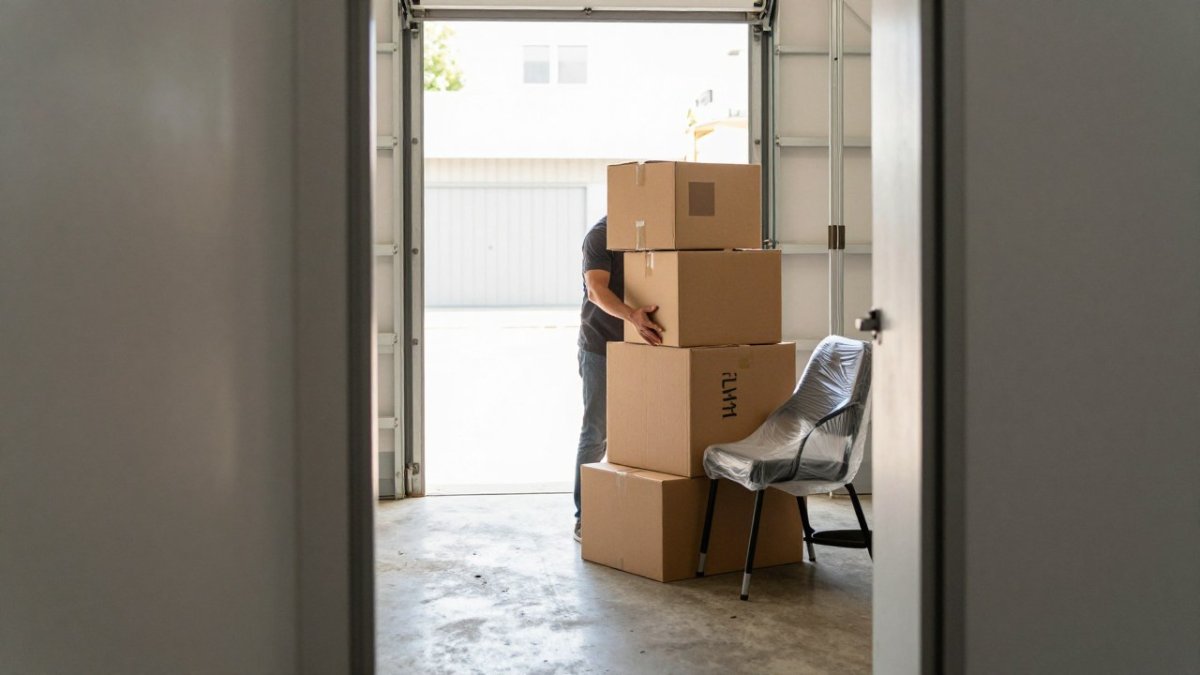
Work in this order:
- Place shelving units along the side walls first
- Load the heaviest boxes onto the bottom shelves
- Stand mattresses and large flat items against the back wall
- Stack lighter boxes to the ceiling on the shelves
- Keep a 2-foot path from door to back wall
Label every box on two sides with contents and room. In a small unit, you will be reaching over boxes constantly, and a label you cannot see is a label that does not exist. For more arrangement tactics, our guide on how to organize a small storage unit covers shelving layouts in detail.
Access Frequency and Aisle Planning
Plan your unit around how often you visit. Items you need monthly belong near the door at waist height; items you need once a year belong at the back or the top. Renters who ignore this end up reshuffling the entire unit every December to reach the holiday bins.
Aisle planning is the same idea applied to the floor. In a 5x10, a 2-foot-wide path down one side lets you reach the back without moving anything.
If you expect weekly access, say for business inventory, size up one step. The extra square footage buys you a working aisle, and that is worth more than the savings from a tighter unit.
Climate Control and Item-Specific Storage Needs
Some belongings need climate control; most do not. Wood furniture, leather, artwork, photographs, electronics, and family heirlooms are the categories where temperature swings and humidity cause real damage. Plastic bins, tools, lawn equipment, and holiday decor generally survive a standard unit fine.
Units without climate control can swing with the seasons, and summer humidity can be a significant threat. Wood warps, leather cracks, and photographs stick together when moisture cycles through a unit repeatedly.
Our article on climate control mistakes that ruin stored heirlooms covers the specific failure modes, from plastic wrap trapping moisture to boxes sitting directly on concrete. The short version: elevate everything off the floor, leave air gaps along walls, and never seal wood furniture in plastic.
Realistic Capacity Assumptions and Cost Trade-Offs
Most renters overestimate what a small unit holds, then underestimate how much packing inefficiency costs them. The average storage-unit rent was reported at $133 per month by HireAHelper's self-storage statistics, though that figure does not specify unit size or market, so treat it as a national reference point rather than a local price.
The cost trade-off is straightforward. Sizing up one step costs more per month but eliminates the risk of a mid-lease upgrade, which usually means paying movers twice. Sizing down saves money but risks a cramped unit you cannot use.
A practical approach is to measure carefully, allow some slack for packing inefficiency, then choose the size your measurement supports. Pricing depends on unit size, dates, and availability, so check current rates directly with Red D Stor or request a quote rather than budgeting from general averages.
Special Items, Restrictions, and Vehicle Storage Limits
Vehicle storage does not fit in a small unit. Cars, trucks, and SUVs need a parking space or a large drive-up unit, typically 10x20 or larger. A small storage unit holds vehicle accessories, tires, and tools, not the vehicle itself.
Prohibited items are consistent across the industry: flammable liquids, propane tanks, fireworks, firearms, perishable food, live plants, and hazardous chemicals. If it would be illegal to store in a garage, it is illegal in a storage unit. But the restrictions that actually affect small-unit renters are the ones that are not obvious:
- Appliances. A refrigerator or washer must be drained, dried, and propped open before storage. Trapped water grows mold, and a sealed door traps odor. A small unit rarely has the floor space for an appliance alongside boxes, measure the appliance's footprint first.
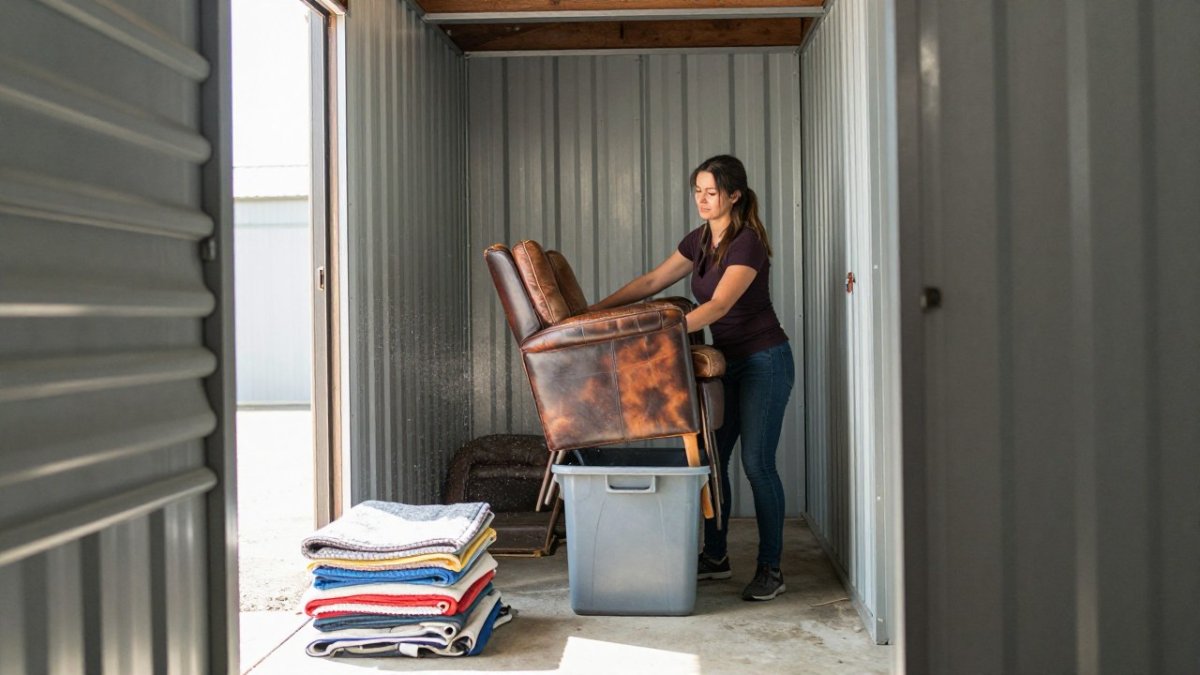
- Mattresses. A mattress stored flat consumes its full footprint and cannot be stacked under heavy items. Stand it on edge against a wall, wrap it in a breathable cover (not plastic), and expect it to consume roughly 5 feet of wall length in a 5x7 or 5x10.
- Bicycles. Bikes fit in a 5x5 if hung vertically from a wall hook or stored with the front wheel turned. Laying a bike flat wastes floor space and invites damage to derailleurs.
- Business inventory. Boxed inventory stacks well, but if you need to pull stock weekly, the access path changes the size calculation. A 5x10 with a working aisle holds less inventory than a 5x10 packed to the door.
- Documents and photographs. Paper is heavy and humidity-sensitive. A single banker's box of files can weigh 40 to 50 pounds, so keep document boxes on the bottom of stacks and off concrete floors.
Some practical limits catch renters off guard. Some small units may not be drive-up, so you may need to carry items down a hallway, measure door widths and hallway turns before you assume a sofa or dresser will fit through.
Watch out: facilities inspect units and can require you to remove prohibited items on short notice.
Reserving Your Small Storage Unit at Red D Stor
Reserving a unit takes less time than measuring for one. At Red D Stor, the rental process is designed to be straightforward. We serve residents and business owners around New Philadelphia and Dover who need dependable space for household goods, seasonal gear, inventory, and equipment.
Here is how to approach it:
- Measure your belongings and pick a size from the chart above
- Contact Red D Stor to confirm availability for the size you need
- Ask about access hours, unit type, and short-term terms
- Bring a lock and load in
If you want the full walkthrough before you commit, our practical guide to renting small storage units locally and our step-by-step rental process guide cover what to expect at each stage.
The hardest part of renting storage is not the rental itself; it is the measuring and packing that comes first. Get that right, and the rest takes an afternoon.
Frequently Asked Questions
What's the smallest size storage unit you can get?
The smallest common size is a 5x5 unit, which offers 25 square feet of floor space, roughly the size of a small closet. A 5x5 can hold a moderate number of boxes, a chair or two, seasonal decorations, and clothing. It works well for people who only need to store a few items rather than the contents of a whole room. Ask the facility about ceiling height, since a taller unit lets you stack more.
How do I know what size storage unit I need?
Start by listing what you plan to store and estimating the floor space each group of items takes up. A small storage unit size guide, like the size chart in this article, maps common dimensions to household contents. As a rule, a 5x5 handles closet-sized loads, a 5x10 handles a studio or one-bedroom apartment's partial contents, and a 10x10 fits a two-bedroom apartment. Measure large furniture at its widest point, then add a foot of clearance for walking and access.
Can a small storage unit hold furniture from a one-bedroom apartment?
A 5x10 unit, at 50 square feet, can typically hold the main furniture from a one-bedroom apartment: a sofa, a mattress and box spring, a dresser, a small dining table, and several dozen boxes. A 5x5 will not fit a full apartment's furniture. If you are storing a full one-bedroom including appliances, a 10x10 gives more room to walk and reach items. Measure your sofa and mattress first, since they often decide whether a 5x10 works.
How should I pack a small storage unit to make the most of the space?
Place large, heavy items like appliances and dressers along the back and sides, then stack boxes in front. Use uniform box sizes so they stack without gaps, and label each box on the side facing the door. Leave a narrow aisle down the middle so you can reach items without unloading the unit. Store frequently used items near the door and seasonal decorations at the back. Keep boxes off the floor on pallets or shelves if the facility allows it.
What can you fit in a 5x10 storage unit?
A 5x10 unit offers 50 square feet, about the size of a walk-in closet. It holds a sofa, a queen mattress set, a dresser, a small dining table with chairs, and roughly 100 to 150 boxes. It also works for seasonal decorations, clothing, shoes, books, office supplies, and a bicycle. Many renters use a 5x10 for a studio apartment's contents or as overflow storage during a move. Confirm the door width before renting if you have oversized furniture.
Do I need climate control for a small storage unit?
Climate control matters if you are storing wood furniture, leather, electronics, photographs, books, or family heirlooms. Temperature swings and humidity can warp wood, crack leather, and encourage mold. Standard units are fine for plastic totes, metal tools, and holiday decorations that tolerate heat and cold. Ask the facility how the unit is heated and cooled and whether humidity is managed. If your items are valuable or sensitive, choose a climate-controlled unit.
How much does a small storage unit cost each month?
Pricing depends on unit size, location, climate control, and availability, so ask the facility for a current quote rather than relying on averages. Nationwide, the average storage-unit rent has been reported at $133 per month, but that figure does not specify unit size or conditions. Small units usually cost less than large ones. Ask about the total monthly cost, including any admin fees or insurance, and whether the rate can change after the first year.
Can I rent a small storage unit for just a few months?
Ask about the minimum term, notice period for moving out, and any early-termination fees before you sign. Short-term rentals are common for moves that take three to four months while a house purchase closes. Confirm the move-out process in writing so you know how much notice to give and whether the unit must be swept clean. Get the terms in writing before you commit.