 How-to
Protecting Furniture From Water Damage: A Room-by-Room Plan
Last Updated: November 19, 2026
Quick Summary
Protecting furniture from water damage means stopping leaks early, keeping indoor humidity low, and acting within the first 24 to 48 hours after a spill. Move pieces to a dry, ventilated area, elevate legs on blocks, and run fans and a dehumidifier. Fast drying prevents swelling, warping, mold, and musty odors.
- Check washer, fridge, and dishwasher hoses once a season for bulges or cracks.
- Raise legs on blocks so the base sits 6 to 12 inches above the expected water line.
- Aim for indoor relative humidity below 50 percent and keep rooms between 70 and 80 degrees Fahrenheit.
- Discard porous furniture, upholstery, and particleboard that touched black water rather than restoring it.
- Photograph each piece before moving it to support your insurance claim.
Table of Contents
- Why Water Damage Ruins Furniture Faster Than Most People Expect
- Protecting Furniture From Water Damage at Home: Prevention That Actually Works
- How to Protect Furniture From Floodwater Before It Arrives
- The First 24 to 48 Hours: A Timed Response Plan
- How to Dry Water-Damaged Furniture Without Making It Worse
- Material-by-Material Playbook: Wood, Upholstery, Leather, Metal, Particleboard
- Not All Water Is Equal: Contamination Levels and What They Mean for Salvage
- Assessing Salvageability and Documenting Damage for Insurance
- Protecting Furniture From Moisture in Storage
- Choosing a Storage Unit That Keeps Furniture Dry
- Frequently Asked Questions
Why Water Damage Ruins Furniture Faster Than Most People Expect
Water damage is the process by which moisture weakens, warps, stains, or contaminates furniture, and it moves faster than almost any homeowner expects. According to RubyHome's water damage statistics, about 1 in 60 insured homes files a water or freezing claim each year, and the average payout runs $13,954.
Most of the loss is not the water itself. It is the hours that follow.
Wood swells within hours of soaking. Glue joints soften. Upholstery wicks moisture into foam that stays wet for days. Small leaks can turn into ruined furniture quickly, and much of that damage is preventable with faster decisions.
Below, we break down prevention, a timed response plan, and material-specific steps so you know exactly what to do when water finds your furniture.
Protecting Furniture From Water Damage at Home: Prevention That Actually Works
Most water damage at home starts small: a slow supply-line leak, a sweating pipe, a spill that seeps under a bookcase. Stopping those sources is the cheapest protection you will ever buy.
Stop Leaks Before They Reach the Legs
Work through this list once a season:
- Check the hoses behind your washer, fridge, and dishwasher for bulges or cracks.
- Replace rubber washing machine hoses with braided steel ones.
- Look under sinks for rust rings or soft cabinet floors.
- Test your water heater's relief valve and watch for moisture at the base.
- Seal basement and garage walls where damp patches appear.
- Keep furniture at least a few inches off exterior walls so leaks show up early.
A common mistake is ignoring the first small stain. By the time a cabinet floor darkens, water has usually been running for weeks.
Indoor Humidity and Condensation Control
High indoor humidity is quiet water damage. Moisture settles on wood and fabric, and condensation forms where cool surfaces meet warm air.
Keep indoor humidity levels under control with these steps:
- Run exhaust fans in bathrooms and kitchens.
- Use a dehumidifier in basements and closed rooms.
- Keep furniture away from exterior walls and cold windows.
- Open air gaps behind large pieces so air circulation can dry surfaces.
How to Protect Furniture From Floodwater Before It Arrives
Floodwater is a different threat from a leak, and the preparation window is short. When a flood warning is issued, the goal is elevation and removal, not heroics. Emergency guidance stresses that even a few inches of moving floodwater can knock a person down and that floodwater can carry an electrical current, so the preparation steps below prioritize safety before salvage.
Before the Water Arrives: A 60-Minute Prep Sequence
Work in this order so you are not moving furniture while water is already at the door:
- Shut off utilities at the source. Turn off the main electrical breaker if water is expected to reach outlets, and close the main gas valve only if instructed by your utility. Never stand in water to flip a breaker.
- Move the smallest, most valuable pieces first. Prioritize wood furniture, upholstered pieces, leather, electronics, and anything sentimental. Carry items to upper floors or to the highest interior room away from exterior walls.
- Elevate what cannot move. Raise legs on concrete blocks, bricks, or pallets so the base sits at least 6 to 12 inches above the expected water line. A common pattern is to underestimate the line by a foot; add margin.
- Create a waterproof barrier at the base. Wrap lower legs and the underside of large pieces in plastic sheeting or waterproof covers, then tape the seam above the expected water line so water cannot wick upward. Do not seal the entire piece, because trapped moisture causes its own damage after the flood recedes.
- Bring fabric and cushions inside. Outdoor cushions, rugs, and fabric items wick water and hold it for days. Move them to a dry interior room or upper floor.
- Unplug and lift electronics off the floor. Move cords and power strips to a dry surface, and do not run extension cords across wet floors.
- Document the room before you leave. Photograph furniture in place so you have a before image for any insurance claim.
Elevation and Barrier Materials That Actually Work
Not every barrier performs the same way. Concrete blocks and pressure-treated pallets resist water and hold weight; cardboard boxes and untreated wood wick moisture and collapse. Heavy-duty polyethylene sheeting (often sold as 6-mil or thicker) is the common choice for wrapping legs and bases, while breathable furniture covers are better for pieces that will stay in place and need airflow. A common mistake is wrapping a piece tightly in plastic and leaving it for days after the water recedes, which traps condensation against the finish.
Watch out: never re-enter standing water to save furniture if the power is still on. Floodwater can carry a live electrical current, and the risk of electrocution is the reason emergency guidance says to wait for utility clearance before re-entering a flooded room.
Outdoor Furniture Before a Storm
For patios and decks, the goal is to keep water from pooling against the furniture and to keep fabric dry. Stack or move lightweight pieces into a garage or shed, tilt tables so water runs off, and bring cushions and fabric slings inside. Use waterproof covers on pieces that must stay outside, and secure them so wind does not tear the cover loose and expose the furniture to rain. Metal furniture should be dried and given a light protective coat after the storm passes, because standing water on joints is where rust starts.
The First 24 to 48 Hours: A Timed Response Plan
The first 24 to 48 hours decide whether furniture can be salvaged or must be replaced. Move fast, but move in the right order.
Hour 0 to 2: Stop the source and document.
- Shut off water at the valve.
- Photograph everything before you move it.
- Remove standing water with towels, a wet-dry vacuum, or a pump.
Hour 2 to 6: Get furniture out of the water.
- Move pieces to a dry, ventilated area.
- Elevate legs on blocks so air reaches the base.
- Pull drawers out and separate cushions from frames.
Hour 6 to 24: Start drying.
- Run fans and a dehumidifier.
- Blot upholstery and wipe hard surfaces.
- Keep air moving between pieces.
Hour 24 to 48: Assess and decide.
- Check for swelling, warping, and odors.
- Call a professional restoration service for anything valuable or heavily soaked.
The first two days decide whether furniture can be saved, so follow this order.
| Time window | What to do |
|---|---|
| Hour 0 to 2 | Shut off water at the valve, photograph everything, remove standing water |
| Hour 2 to 6 | Move pieces to a dry, ventilated area and elevate legs on blocks |
| Hour 6 to 24 | Run fans and a dehumidifier, blot upholstery, keep air moving |
| Hour 24 to 48 | Check for swelling, warping, and odors; call a professional restorer |
How to Dry Water-Damaged Furniture Without Making It Worse
Drying water-damaged furniture works best with steady airflow, low humidity, and patience. Heat and sunlight are the two fastest ways to make the damage permanent. Mold can begin growing on wet materials within 24 to 48 hours, which is why the drying method matters as much as the speed.
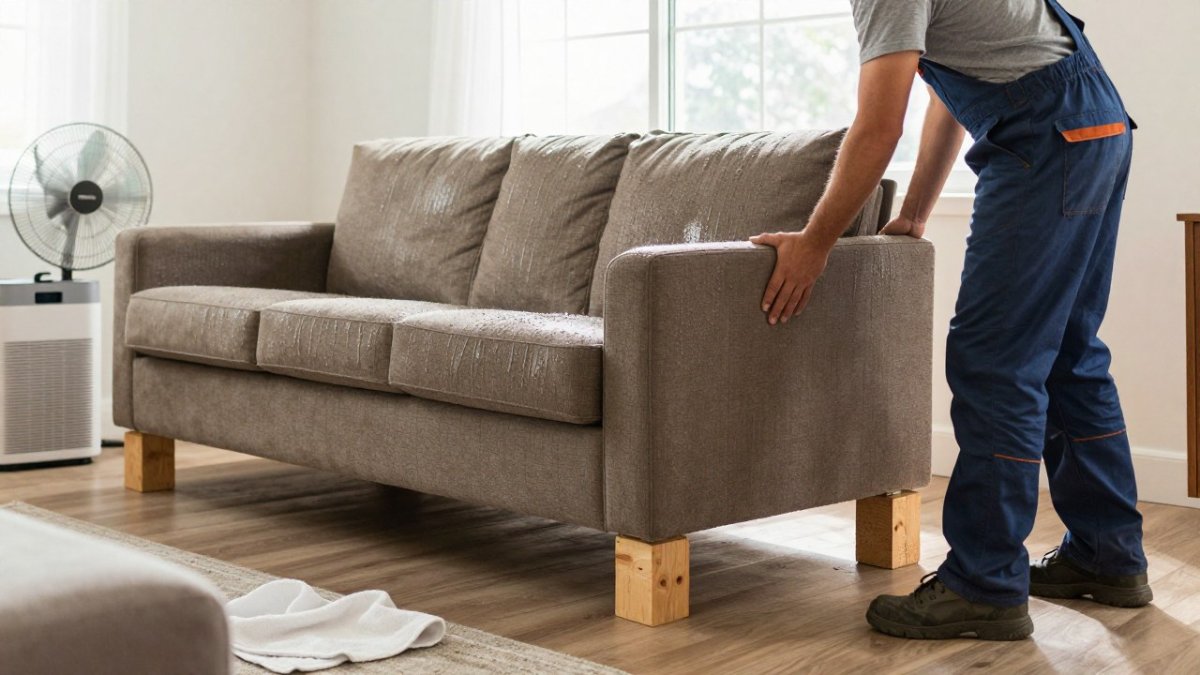
Set the Room Before You Set the Furniture
The room conditions decide how fast furniture dries. Aim for indoor relative humidity below 50 percent, and keep the space between 70 and 80 degrees Fahrenheit if you can. A hygrometer (a small humidity gauge) tells you whether the room is actually drying or just moving damp air around. Close windows and doors to the drying zone so humid outdoor air does not undo the work, and run the dehumidifier continuously until the gauge holds steady.
Airflow Mechanics: Where the Air Needs to Go
Air must reach every wet surface, not just the front of the piece. Set box fans or air movers so they blow across the underside, the back, and the joints, and angle them slightly upward so air moves along the surface rather than straight into it. Leave at least a few inches between pieces so air can circulate, and open drawers and doors so interior surfaces dry. A common pattern is to point one fan at the front of a dresser and call it done; the back panel and drawer runners stay wet for days.
Tool-by-Tool: What Helps and What Ruins Finishes
Tools that help:
- Box fans and air movers for surface airflow
- A refrigerant or desiccant dehumidifier sized to the room
- Wet-dry vacuums for pulling standing water out of seams and foam
- Absorbent towels and microfiber cloths for blotting
- Wood blocks or pallets for elevation
- A hygrometer to confirm the room is actually drying
Tools that ruin finishes:
- Hair dryers on high heat, which drive moisture deeper and crack veneer
- Space heaters pointed at wood, which cause uneven shrinkage
- Direct sunlight for hours, which bleaches and warps
- Plastic sheeting wrapped around a piece, which traps moisture against the surface
Watch out: do not set wet wood in direct sun or in front of a space heater. Fast heat causes warping, cracking, and split veneer, and the damage is usually permanent.
Drying by Water Source: Clean, Gray, and Black Water
The source of the water changes the drying method, not just the cleaning method. Clean water from a supply line can usually be dried in place with fans and a dehumidifier. Gray water from a washing machine or dishwasher overflow needs the surface cleaned and disinfected before drying, because residue can feed mold. Black water from flooding or sewage backup should not be dried in place at all: porous furniture, upholstery, and particleboard that touched black water should be discarded rather than restored, and hard surfaces should be disinfected per guidance from the Centers for Disease Control and Prevention (CDC) before they are returned to use.
When Drying Is Not Enough
If a piece still smells musty after 48 hours of steady airflow and low humidity, or if the frame feels soft or the veneer lifts, the moisture is deeper than surface drying can reach. Consider a professional restoration service for anything valuable or heavily soaked, and document the piece before you decide to discard it so your insurance claim reflects the loss.
Material-by-Material Playbook: Wood, Upholstery, Leather, Metal, Particleboard
Each material reacts differently to water exposure, so the drying method has to match the material. Here is how to handle the five most common types.
Wood furniture. Blot the surface, dry joints first, and keep air moving. Swelling and warping appear within days if the base stays damp. Do not sand until the wood is fully dry.
Upholstered furniture. Remove cushions and dry them separately. Foam holds water for days, so fans and a dehumidifier are essential. Mildew can start within 24 to 48 hours.
Leather. Wipe gently and let it air dry away from heat. Leather that dries too fast cracks. Condition it only after it is fully dry.
Metal. Dry immediately to prevent rust. Wipe joints and hardware, then apply a light protective coat.
Particleboard. This is the hardest material to save. Particleboard swells and crumbles once soaked, and it rarely returns to shape. Replace it rather than restore it.
Not All Water Is Equal: Contamination Levels and What They Mean for Salvage
The source of the water decides whether furniture can be salvaged at all. Clean water from a supply line is a very different problem from floodwater that carried mud and sewage.
Clean water. From a broken supply line or rain through a window. Furniture is usually salvageable if you dry it quickly.
Gray water. From a washing machine, dishwasher, or toilet overflow. Salvage is possible, but clean and disinfect surfaces.
Black water. From flooding, sewage backup, or outdoor standing water. This water carries contamination. Porous furniture, upholstery, and particleboard should be discarded rather than restored.
If black water touched the furniture, treat it as a health risk, not a cleaning job.
Assessing Salvageability and Documenting Damage for Insurance
A clear damage assessment protects both your furniture and your claim. According to ConsumerAffairs' water damage insurance claims data, the average household water damage claim exceeds $12,500, so documentation matters.
Use this checklist:
- Photograph each piece before moving it
- Note the water source and how long it was wet
- Record visible damage: swelling, stains, odors, mold
- Keep receipts and purchase records if you have them
- Save any pieces you discard until the claim is settled
- Get a written estimate from a professional restorer
Salvageable signs: surface stains only, no structural swelling, no odor after drying. Replace signs: crumbling particleboard, mold in foam, warped frames, persistent odor.
Protecting Furniture From Moisture in Storage
Storage is where furniture faces slow, invisible moisture damage. A unit that stays dry and ventilated protects your belongings.
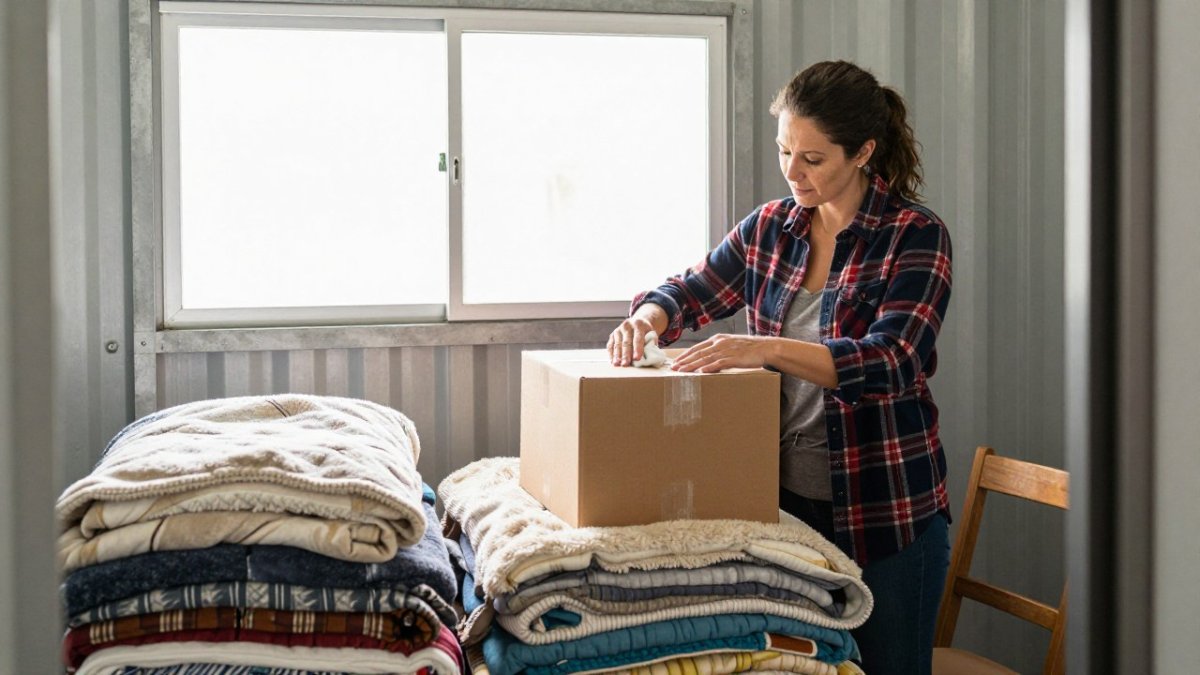
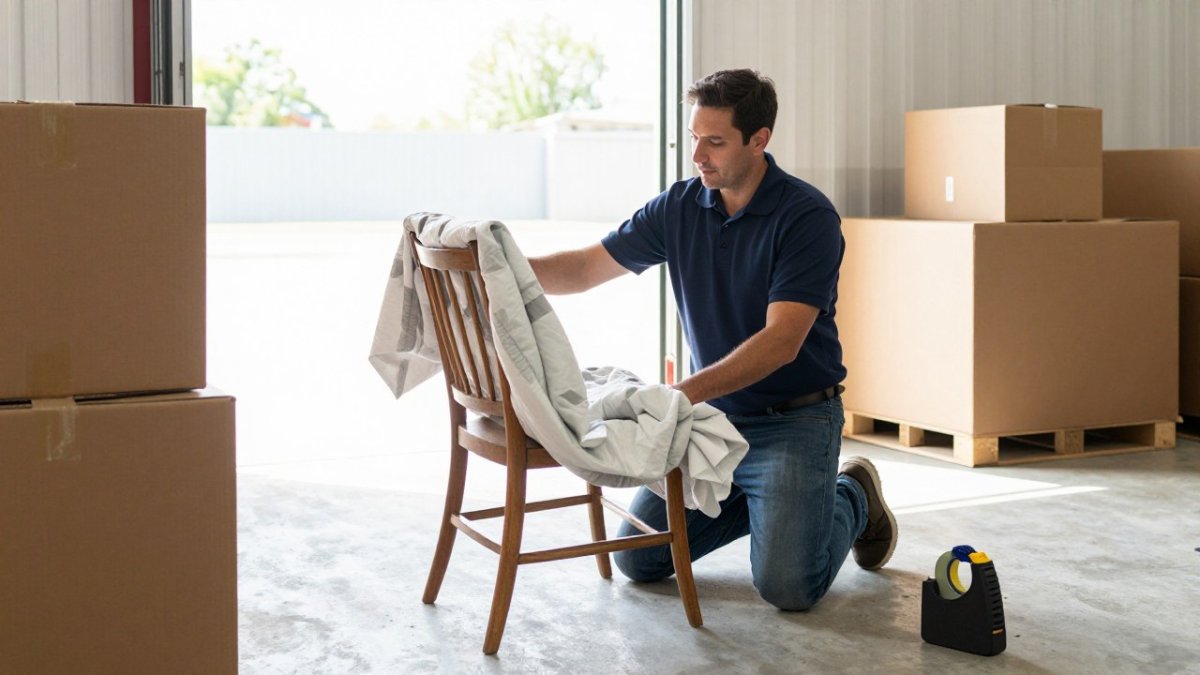
Before storing, clean and fully dry every piece. Never store furniture that is still damp. For the full method, see our guide on how to store furniture safely without damage, and follow our step-by-step furniture packing guide so moisture cannot get trapped under wraps.
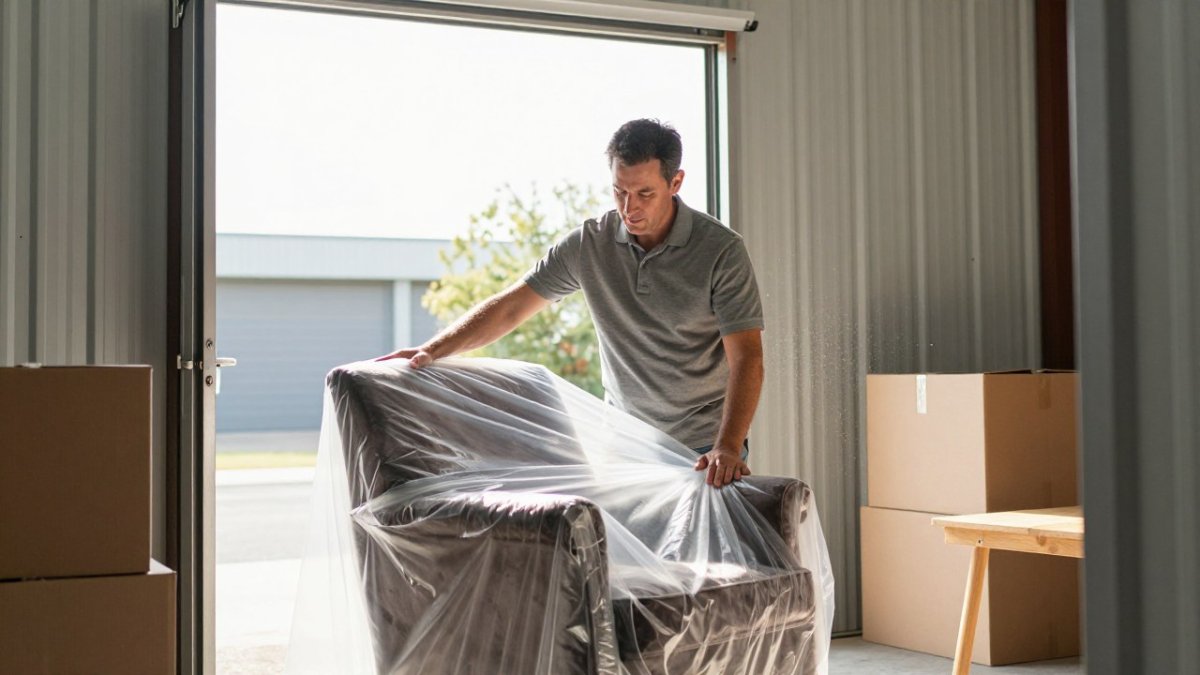
Use waterproof covers on top of pieces, not sealed around them, so air can escape.
Climate Control, Elevation, and Air Gaps
Three habits prevent most storage moisture problems:
- Climate control. A unit with stable conditions stops condensation from forming on wood and leather.
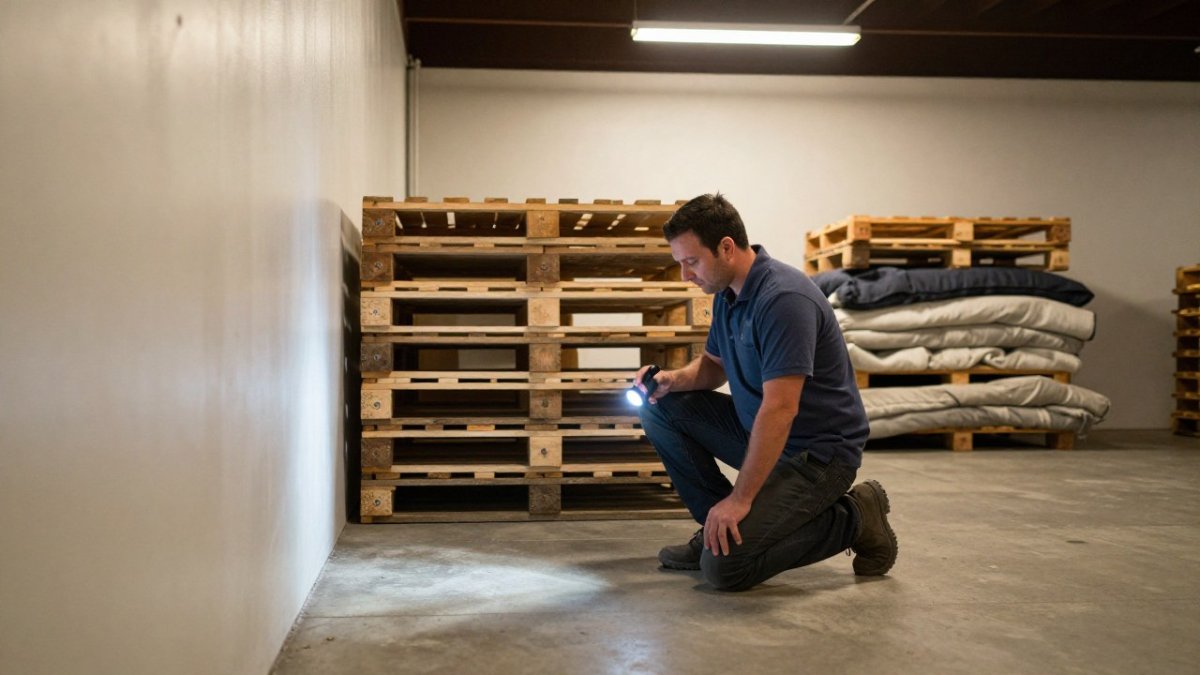
- Elevation. Set furniture on pallets or blocks so damp floors cannot wick up.
- Air gaps. Leave space between pieces and walls so air circulates.
Avoid these common climate control mistakes that ruin stored heirlooms, especially sealing furniture in plastic, which traps moisture against the surface.
Choosing a Storage Unit That Keeps Furniture Dry
Picking the right unit is the last line of defense for wood furniture, upholstery, and keepsakes. Look for a dry, secure facility with clear access and no history of leaks.
Check these requirements before you sign:
- No water stains, rust, or musty smell in the unit
- Working ventilation or climate control
- Doors that seal against rain
- Elevation above grade, especially in low areas
- Clear pest control and security
Our secure furniture storage requirements guide walks through the full checklist, and our storage unit size guide helps you pick a unit that fits without wasted space.
Red D Stor offers a secure storage facility with a simple rental process. Whether you are storing heirlooms, business inventory, or seasonal gear, contact us for current availability and a quote.
Water damage rarely gives you a warning, but it always gives you a window. The homeowners who save their furniture are the ones who act in the first hours, dry it the right way, and store it somewhere dry afterward.
Red D Stor gives you a secure facility, a straightforward rental process, and locally focused service so your furniture stays protected after the cleanup is done. Get started with Red D Stor and keep your furniture dry, secure, and ready for the next season.
Frequently Asked Questions
Can water-damaged wood furniture be saved?
Solid wood often can be saved if you act within the first 24 to 48 hours. Blot standing water, move the piece to a dry area with air circulation, and run a dehumidifier rather than direct heat, which causes warping and cracking. Veneer and particleboard are less forgiving because swelling breaks the internal bond. Check for a musty smell and soft spots along joints after a week; if either persists, the piece is likely beyond restoration and should be documented for an insurance claim.
What should I do first if furniture gets wet?
Stop the water source, then get the furniture off the wet floor within the first hour. Water wicks up wood legs and into upholstery padding fast. Blot surfaces with clean towels, pull cushions out to dry separately, and set up fans plus a dehumidifier. Photograph everything before you move it if you plan to file a claim. Documentation matters when filing an insurance claim for water damage.
How do you keep furniture from getting damp in storage?
Elevate everything off the concrete floor using pallets or plastic sheeting, leave a few inches of air gap between pieces and the walls, and avoid sealing units airtight. Moisture in storage usually comes from the slab and from humid air, not from rain. Use breathable cotton covers rather than plastic, which traps condensation against finishes. Ask whether the facility is climate-controlled, since steady humidity is the single biggest factor in protecting furniture from moisture in storage.
How can you prevent mold on furniture after water damage?
Mold needs moisture and still air, so drying fast is the whole strategy. Get airflow moving within hours, keep indoor humidity below 50 percent with a dehumidifier, and pull upholstery cushions apart so air reaches the padding. Sunlight helps on removable pieces but fades finishes, so limit it. Anything that stays wet longer than 48 hours, especially carpet-backed upholstery and particleboard, should be treated as a mold risk and evaluated before it goes back into a living space.