 How-to
How Do You Prevent Pests in Storage Units?
Last Updated: November 12, 2026
Quick Summary
To prevent pests in storage, clean and fully dry every item before packing, keep all food out, and seal belongings in plastic bins rather than cardboard. Block entry points with steel wool and choose a facility that inspects its grounds and treats common areas.
- Clean and dry all furniture, clothing, and appliances before packing, since pests follow crumbs, moisture, and dust.
- Never store food of any kind, including pet food and birdseed, because even a forgotten box of crackers can attract rodents.
- Use plastic storage containers with tight-fitting lids and keep cardboard only for short-term, dry storage.
- Elevate boxes on wooden pallets or shelves, because mice hug walls and floors.
- Report any pest signs to facility staff immediately and never spray pesticide inside a unit without approval.
Table of Contents
- Before You Pack: Prep Your Belongings to Prevent Pests
- Common Bugs Found in Storage Units and How to Spot Them
- What to Put in a Storage Unit to Keep Bugs Away
- How to Keep Mice Out of a Storage Unit
- The Best Rodent Repellent for Storage Units (and What Doesn't Work)
- Packing Materials and Containers That Block Pests
- How to Arrange Your Unit to Discourage Pests
- Choosing a Facility That Takes Pest Control Seriously
- What to Do If You Find Pests in Your Unit
- Ready to Store Your Belongings Pest-Free? Reserve a Unit at Red D Stor
- Frequently Asked Questions
Before You Pack: Prep Your Belongings to Prevent Pests
According to Cornell University's pest management guidance, pest prevention in storage comes down to two things: sanitation and exclusion. Remove what pests eat and where they hide, then block their way in. That is the whole playbook for how to prevent pests in storage, and it starts before you ever load the truck.
Here is the good news: most pest problems are avoidable. You just need to do the boring work first.
Clean and Dry Everything First
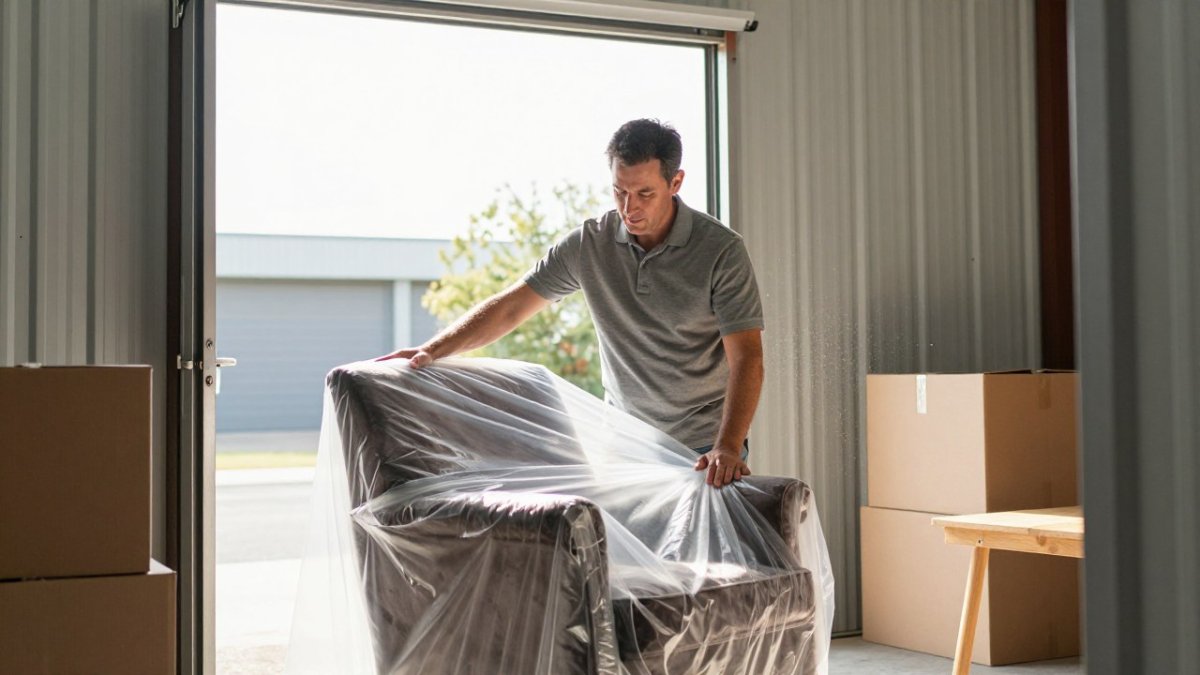
Pests follow crumbs, moisture, and dust. So clean every item before it goes in a box.
- Wipe down furniture, shelves, and appliances
- Vacuum upholstery and cushions
- Wash and fully dry clothing and linens
- Empty and clean appliances completely
- Let everything air dry before packing
Moisture is the quiet troublemaker. Damp items invite mold and insects. A 2019 review of stored-product pest management notes that temperature and moisture conditions strongly affect whether pests thrive. Dry belongings remove that invitation.
Declutter Before You Store
Why pay to store things you do not need? Decluttering also cuts hiding spots.
Sort items into three piles: keep, donate, and toss. Old newspapers, worn cardboard, and fabric scraps are pest magnets. Toss them. Fewer items means fewer places for bugs to settle in.
Common Bugs Found in Storage Units and How to Spot Them
Common storage pests include mice, rats, ants, cockroaches, silverfish, moths, and spiders. Each one leaves clues. Learn the signs and you can catch a problem early.
Signs of Infestation to Check For
Look for these before you sign a lease and again every visit:
- Droppings near walls and corners
- Gnaw marks on boxes or furniture legs
- Grease smudges along baseboards
- Chewed fabric or paper
- Live insects or egg cases
- Nests made of shredded material
- A musty or oily smell
Mice leave small dark droppings and rub marks. Cockroaches leave a sweet, oily odor. Moths leave webbing and tiny holes in wool and cotton. Ants travel in visible trails.
Check the unit itself, the hallway, and the grounds. If you see activity outside, ask facility staff about it.
What to Put in a Storage Unit to Keep Bugs Away
The right contents keep bugs out. The wrong ones roll out the welcome mat.
Store these safely:
- Furniture, tools, and equipment
- Sealed plastic bins of clothing
- Metal and glass items
- Well-packed electronics
- Documents in sealed totes
Keep these out entirely:
- Food of any kind, including pet food
- Birdseed and garden supplies
- Scented candles and soaps
- Fresh plants or soil
- Trash and recycling
Food is a common mistake. Even a forgotten box of crackers can attract rodents. If you must store pantry goods, check your storage agreement first.
How to Keep Mice Out of a Storage Unit
Mice are the top headache in self-storage. They squeeze through gaps the width of a pencil and chew through cardboard in minutes. Keeping them out takes three moves: block entry, remove food, and elevate your stuff.
Start with the unit itself. Check the door seal and sweep the floor clean.
Then pack smart. Use plastic bins, not cardboard. Mice nest in paper and fabric, so limit both.
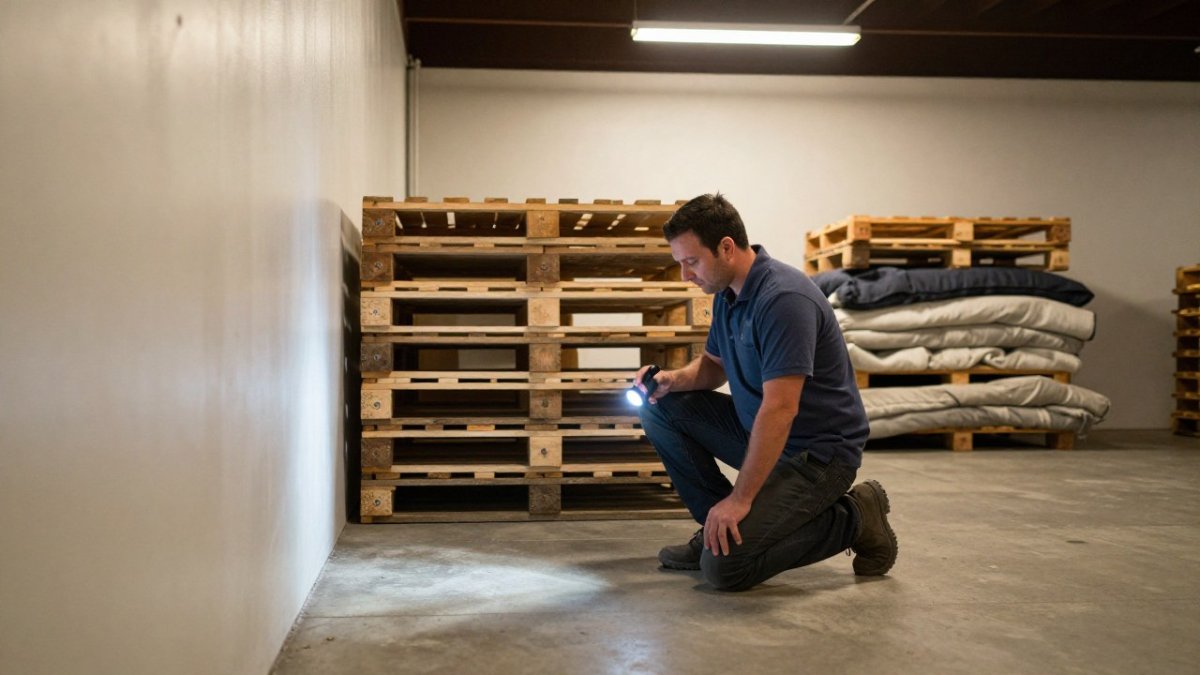
Finally, get items off the floor. A wooden pallet or shelf keeps boxes above the traffic zone. Mice hug walls and floors, so height is your friend.
The Best Rodent Repellent for Storage Units (and What Doesn't Work)
No repellent replaces a clean, sealed unit. Deterrents can help as a backup, but they are not a fix.
What may help, and how to use it safely:
- Cedar chips and cedarwood blocks placed in corners and near the door. Cedar oil is a contact irritant, so keep chips in open containers rather than loose on the floor, and do not pile them against cardboard or fabric.
- Peppermint and lavender oils on cotton balls near entry points. Essential oils are concentrated; never pour them directly on belongings, and refresh the cotton every few weeks because the scent fades.
- Diatomaceous earth along baseboards, kept dry. Use food-grade diatomaceous earth, wear a dust mask when applying it, and keep it away from anything that will be handled later. It loses effectiveness once it absorbs moisture.
- Steel wool packed into small gaps. This is exclusion, not a repellent, and it is the most reliable item on the list. Coarse steel wool blocks gaps around pipes and door frames; replace it if it rusts.
What usually disappoints:
- Ultrasonic repellents, which rodents quickly ignore and which do not penetrate boxes or bins.
- Mothballs, which can be a health risk in enclosed spaces. Never use them around belongings you will later wear or sleep on.
- Scented sprays that fade within days and leave residue on fabric and paper.
- Poison baits and traps set inside a rented unit. These can harm pets, children, and neighboring renters, and most leases prohibit them without facility approval.
The EPA's pest control guidance is clear: try prevention first, and use pesticides only when needed and exactly as labeled. Never set traps or poison inside a rented unit without checking facility rules. And never treat a repellent as a substitute for sealing your belongings.
Watch out: mixing repellents, cedar chips plus essential oils plus diatomaceous earth in the same corner, can create a mess that is hard to clean and may stain boxes. Pick one approach per area and keep a written note of what you used and when, so you can tell whether it is working.
Here is how the article rates common repellents and deterrents, and what to avoid.
| Option | Verdict | How to use or why it fails |
|---|---|---|
| Cedar chips and cedarwood blocks | May help | Open containers in corners and near door |
| Peppermint and lavender oils | May help | Cotton balls near entry points, refresh every few weeks |
| Diatomaceous earth | May help | Food-grade, along baseboards, kept dry |
| Steel wool | Most reliable | Packed into small gaps; exclusion, not a repellent |
| Ultrasonic repellents | Usually disappoints | Rodents ignore them; do not penetrate boxes or bins |
| Mothballs | Usually disappoints | Health risk in enclosed spaces |
| Scented sprays | Usually disappoints | Fade within days, leave residue |
| Poison baits and traps | Usually disappoints | Can harm pets and neighbors; most leases prohibit |
Packing Materials and Containers That Block Pests
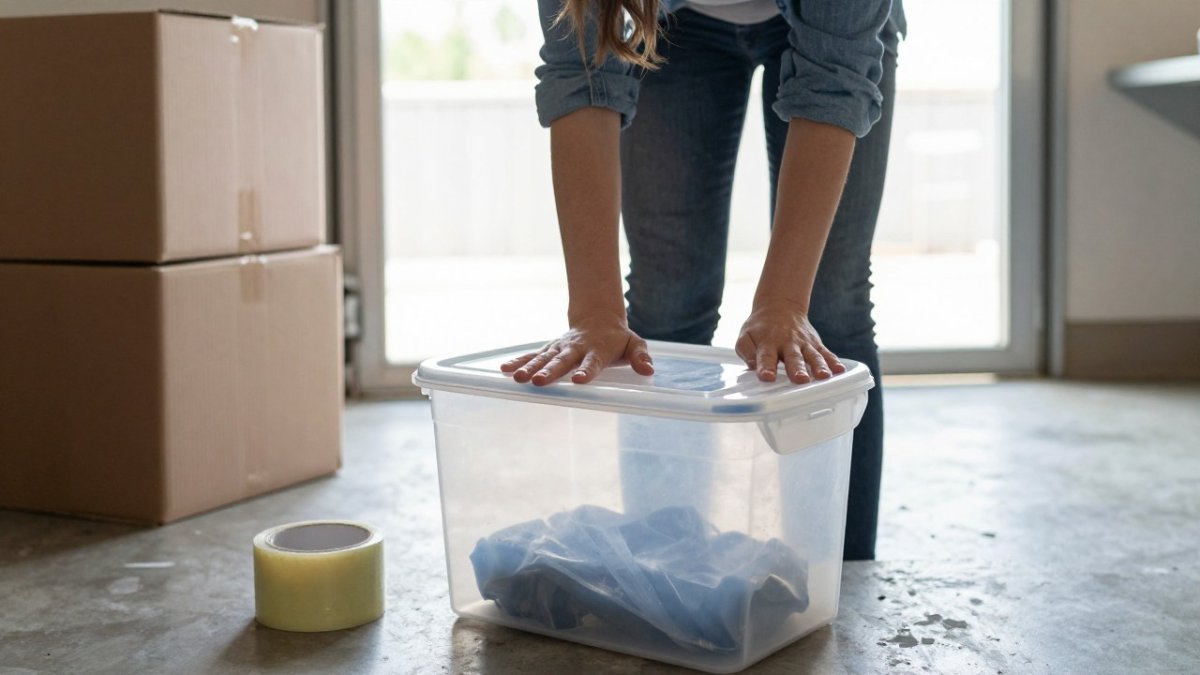
Plastic wins. Cardboard loses. It really is that simple.
- Plastic storage containers with tight-fitting lids are your best defense
- Airtight bags protect clothing and linens
- Heavy-duty tape seals seams and edges
- Wooden pallets lift boxes off concrete
- Cardboard boxes work only for short-term, dry storage
Cardboard absorbs moisture and makes cozy nests. If you use it, tape every seam and keep it off the floor.
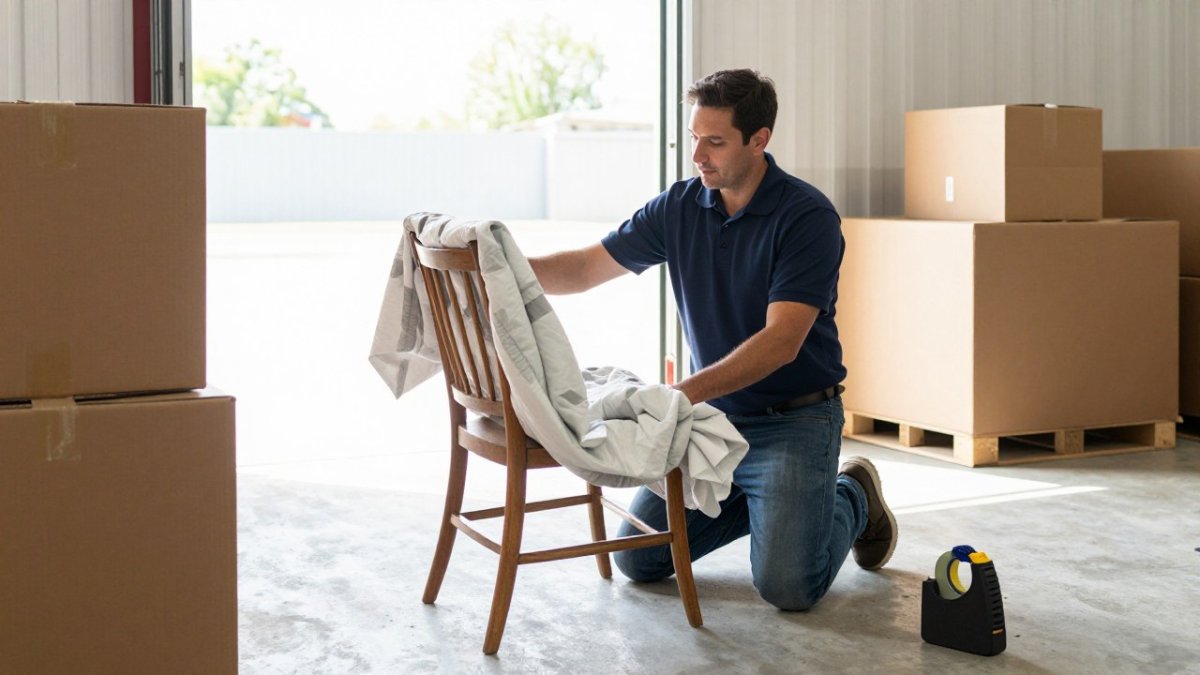
For a full walkthrough on protecting your furniture, see our guide on how to pack furniture for storage.
How to Arrange Your Unit to Discourage Pests
Layout matters more than most people think. A packed, cluttered unit gives pests places to hide and makes problems hard to spot.
Follow these rules:
- Leave a walkway down the middle
- Keep a gap between boxes and walls
- Stack bins squarely, not in leaning towers
- Put rarely used items in the back
- Keep the floor clear and visible
Airflow keeps things dry, and dry conditions discourage insects. Space also lets you inspect quickly. If you can walk in and scan the corners, you will catch a problem early.
For layout tips, read our guide on how to organize a small storage unit. And if you are storing furniture, our article on how to store furniture safely covers damage prevention in detail.
Choosing a Facility That Takes Pest Control Seriously
A clean facility is not luck. It is management. Ask questions before you sign anything, and look for evidence rather than assurances.
Use this checklist:
- Ask staff about the pest-control policy and treatment schedule. A serious facility can name the licensed pest professional it uses and describe how often common areas are inspected.
- Ask whether the facility uses monitoring stations, tamper-resistant bait or trap stations placed along exterior walls and in hallways. Visible, labeled stations are a sign of an active program; none at all is a warning.
- Inspect the grounds for trash, standing water, and overgrowth. Dumpsters should sit on concrete pads away from unit doors, and grass should be cut back from exterior walls.
- Look inside the unit for droppings, gnaw marks, and smells. Check corners, the top of the door track, and the seam where the floor meets the wall.
- Check door seals and wall gaps. Run a finger along the door gasket; it should be pliable and continuous. Look for daylight under the door and gaps around pipes or conduit.
- Ask how often common areas are cleaned and whether hallways are swept and mopped on a schedule.
- Confirm whether climate control is available. Cool, dry air is less friendly to insects, and the stored-product research supports temperature as a real control lever.
- Ask what happens if you report a pest problem. The answer should include a timeline, a named contact, and a treatment step, not just "we'll look into it."
- Ask whether the facility requires renters to report pests and whether it inspects units before or after move-in.
If staff cannot answer these questions directly, ask for a manager.
What to Do If You Find Pests in Your Unit
Do not panic, and do not start spraying. Act in order.
- Report it to facility staff immediately
- Photograph the signs for your records
- Remove any food or damp items
- Isolate infested boxes and bag them
- Clean the unit and reseal gaps
- Follow the facility's treatment plan
Watch out: spraying pesticide inside a unit without approval can violate your lease and endanger neighbors. Let staff handle treatment.
If pests damaged your belongings, document everything. Ask about insurance and coverage before you sign, since responsibility for stored items depends on your rental agreement.
Ready to Store Your Belongings Pest-Free? Reserve a Unit at Red D Stor
Prevention beats repair every time. Clean your items, pack in sealed plastic, keep food out, elevate your boxes, and choose a facility that inspects and maintains its grounds. Do those five things and pests rarely get a foothold.
Red D Stor makes that easy. Our secure facility offers a simple rental process and a convenient location. Contact us to find the right unit size for your needs.
Not sure what size fits? Our storage unit size guide breaks it down. Ready to move? See the rental process steps so there are no surprises.
Get started with Red D Stor and store your belongings with confidence.
Choosing the right unit is the last step, and the easiest one. Red D Stor offers secure, locally focused self-storage with a straightforward rental process and flexible options for households, movers, and businesses. Our team helps you size the unit correctly and answers your pest-control questions up front. Get started with Red D Stor and keep your belongings clean, dry, and pest-free.
Frequently Asked Questions
What can I put in my storage unit to keep bugs away?
Cedar chips, cedarwood blocks, and cotton balls soaked in mint or lavender oil can help deter some insects, but they work best alongside sanitation and exclusion. Cornell University's pest management guidance identifies removing food and hiding places and denying pests access as the two core components of prevention. Store belongings in sealed plastic containers with tight-fitting lids, avoid cardboard boxes where possible, and keep food out entirely. Natural deterrents are a supplement, not a substitute, for clean, dry, sealed storage.
How do you keep mice out of a storage unit?
Start by sealing the entry points you control: pack items in heavy-duty plastic bins rather than cardboard, and avoid storing food, birdseed, or pet supplies. Keep boxes and furniture off the floor using pallets or shelving, and leave a walkway so you can inspect for droppings and gnaw marks. Ask facility staff how often they inspect for rodents and whether bait stations are maintained. Cornell's guidance notes that denying pests access is a core prevention component, so report any gaps or damage to staff promptly.
Should you put mothballs in your storage unit?
Mothballs are not a good choice for a storage unit. They contain pesticides that release vapors, and the EPA advises using pesticides only according to label directions and safely. Vapors can build up in an enclosed unit, and the smell can soak into furniture and clothing. Cedar chips, sealed containers, and a clean, dry unit are safer alternatives. If you have a specific insect problem, talk to facility staff about their pest-control policy before introducing any chemical product.
Are storage facilities responsible for rodent damage?
Responsibility depends on your rental agreement, so read it carefully before signing. Many facilities maintain pest-control schedules and inspect common areas, but tenants are usually expected to store belongings in a way that does not attract pests. Ask staff directly about their pest-control policy and treatment schedule, and check whether your renters or homeowners insurance covers stored items. Contact Red D Stor with any questions before you rent.